


🎙️ AUDIO DEEP DIVE OF THIS ISSUE:
Sammy & Mila offer in-depth analysis on each newsletter issue. Subscribe to their podcast on Spotify or any other podcast platform.
🧙♂️ TIPS & TRICKS:
The Truth About Venture Capitals: Debunking Myths
It’s well-known that a staggering 90% of startups fail within their first five years. However, a closer look reveals a surprising statistic: only 30% of startups backed by professional venture capital (VC) firms meet this fate.
This suggests that VCs possess valuable insight into what makes a startup successful. While often the target of entrepreneurial frustration due to rejections, their expertise is undeniable.
Comparing startups with VC funding to those without, the data indicates a threefold reduction in failure rates. But why is this?
Why VC-Backed Startups Are Less Likely to Fail;
Money solves many problems: Access to capital allows startups to overcome financial hurdles, invest in essential resources, and navigate operational challenges that might otherwise hinder their growth or survival.
Guidance and expertise from experienced investors: Venture capitalists often bring valuable industry knowledge, network connections, and strategic guidance to the table. This support can be crucial for inexperienced entrepreneurs navigating the complexities of building and scaling a successful business.
Investor pressure drives focus and execution: The presence of VC funding can create a sense of urgency and accountability, pushing entrepreneurs to prioritize key objectives, make informed decisions, and execute effectively to meet investor expectations.
Increased financial discipline and efficiency: Knowing that investor funds are at stake can motivate entrepreneurs to manage finances more prudently, minimize unnecessary expenses, and optimize resource allocation, leading to greater financial efficiency.
VCs' ability to identify promising ventures: Venture capitalists have access to a vast pool of potential investments and employ rigorous due diligence processes to select startups with high growth potential, strong market opportunities, and capable leadership teams.
While all these factors likely contribute, I would like to focus on the last one. VCs often claim to predict successful ventures based on past data and experience. But how accurate is this?
How VCs Spot Winner Startups
We all know that most startups face countless rejections before securing funding, even the most groundbreaking ones. This competitive landscape is due to the abundance of entrepreneurial ventures and the limited capital available.
VCs must be selective to maximize their chances of high returns.
It's essential to remember that VCs primarily invest other people's money.
Their goal is to outperform traditional investments like stocks, bonds, or real estate. While the potential for massive returns (often exaggerated in the media) is alluring, the reality is more modest.
Top-tier VCs aim for around 30% annual returns, while the average is closer to 15%.

Despite this, VC returns are more consistent than the broader market. Unlike the S&P 500, which can experience negative periods, VCs have managed to maintain positive returns over the long term.
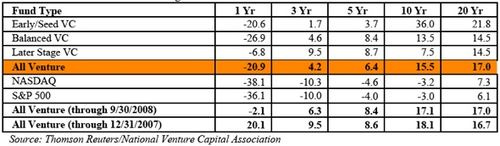
This consistency is a key factor in attracting investors.
Ultimately, the perception of huge VC profits is skewed by the disproportionate media coverage of successful exits. The countless failed startups remain largely invisible.
Despite these challenges, identifying the right venture remains crucial. This requires a combination of three key abilities of VCs:
Developing a successful investment strategy: This involves accurately predicting high-return sectors, determining optimal investment amounts, identifying ideal investment stages, crafting exit strategies, and negotiating favorable terms.
Attracting and nurturing quality startups: Building a strong network, providing valuable mentorship, leveraging past relationships, and achieving notable successes are essential for attracting top-tier ventures.
Mastering venture evaluation: Creating a robust, objective scoring system is vital for accurately assessing startup potential.
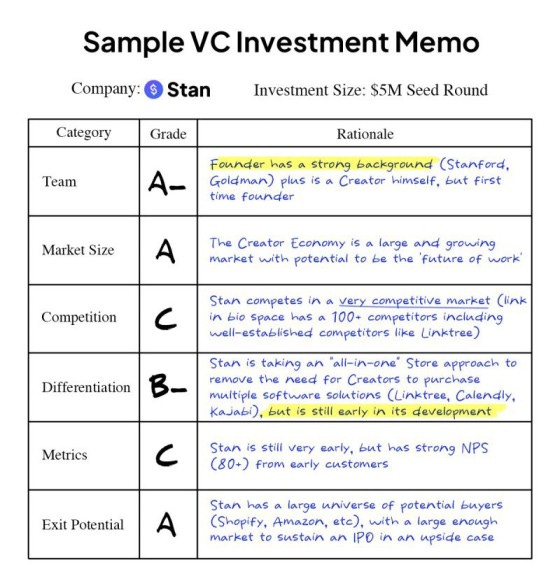
As I mentioned in the first issue, understanding the investor's perspective is crucial for securing investment. By empathizing with their needs, goals, and definition of success, entrepreneurs can better tailor their pitches and identify areas for improvement.
This empathy-driven approach allows startups to align their offerings with investor expectations and increase their chances of securing funding.
📰 LATEST NEWS DECODED:
Apple's Potential AI Stunner at WWDC
Apple's highly anticipated Worldwide Developers Conference (WWDC) is set for June 10th. This year, the tech giant is expected to unveil a slew of updates, including iOS 18, iPadOS 18, tvOS 18, watchOS 11, macOS 15, HomePod Software 18, and VisionOS 2.
While Apple has been relatively quiet on the artificial intelligence front, there’s growing speculation that WWDC will showcase groundbreaking AI advancements.
One particularly intriguing possibility has emerged: Siri-powered, real-time photo editing.
Recent open-sourcing of Apple's MGIE LLM has revealed impressive capabilities.
Imagine transforming photos with simple voice commands:
Turning day into night,
Altering hair color,
Adding accessories,
Changing outfits,
Removing unwanted elements, and
Even modifying facial expressions – all without touching a single button.
If these rumors pan out, Apple could deliver a jaw-dropping demonstration at WWDC that redefines photo editing.
📰 LATEST NEWS DECODED:
Prediction: Elon Musk to Appoint Ilya Sutskever as Head of xAI
The recent departure of Ilya Sutskever, chief scientist at OpenAI, following closely on the heels of CEO Sam Altman's dismissal, has sent shockwaves through the AI community. These events, coupled with the company's announcement of a groundbreaking voice assistant, suggest a period of intense upheaval at the forefront of AI development.
Elon Musk, with his publicly documented differences with OpenAI and its ties to Microsoft, appears to be a central figure in this unfolding drama. Speculation has linked him to both Altman’s ousting and potential overtures to Sutskever.
Adding another layer of complexity to the situation is the role of Mustafa Suleyman, the former co-founder of DeepMind and now CEO of Microsoft AI.
Suleyman's appointment to this role, given his deep expertise in AI and his previous association with DeepMind, a company pivotal to the field’s advancement, signifies Microsoft's aggressive push into AI. This move also underscores the intensifying competition between tech giants for AI dominance.
Given Musk’s ambition to create a rival AI platform, xAI, and his history with Sutskever, it is plausible to predict that the latter will be appointed to lead the new venture.
This would represent a significant coup for Musk, bringing on board a leading figure in the AI field and further intensifying the already fierce competition between OpenAI and xAI. Such a development would have profound implications for the future of artificial intelligence.
📱 NEXT BIG APPS:
AI Revolutionizing Student & Teacher Workflows
Grammarly: Student and teacher's best friend.
For students and teachers alike, crafting clear and error-free written content is essential. Grammarly, an AI-driven writing assistant, has emerged as an indispensable tool for both professions. By providing real-time grammar corrections, style suggestions, and overall writing enhancement, Grammarly empowers users to create impactful and polished social media posts, essays, and other written materials with ease.
Vista Create: Unleashing creativity for designers and social media managers.
In the fast-paced world of design and social media, visual content reigns supreme. Vista Create, an AI-powered visual editor, offers a game-changing solution for graphic designers and social media managers. With its intuitive interface and vast array of templates, effects, and animations, Vista Create simplifies the creation of eye-catching graphics, videos, and other visual assets. This powerful tool enables designers and marketers to produce high-quality content efficiently, without compromising on creativity.
By addressing specific needs within their respective fields, Grammarly and Vista Create exemplify how AI-powered apps are transforming the way professionals work.
💡 INSPIRING IDEAS:
“Being the richest man in the cemetery doesn't matter to me. Going to bed at night saying we've done something wonderful... that's what matters to me.”
— Steve Jobs