


🎙️ AUDIO DEEP DIVE OF THIS ISSUE:
Sammy & Mila offer in-depth analysis on each newsletter issue. Subscribe to their podcast on Spotify or any other podcast platform.
🧙♂️ TIPS & TRICKS:
How to Use Different AI Models in One Place
AI has become a big part of my life, starting with ChatGPT. But then came Gemini and others, each with its own strengths and weaknesses.
Jumping between models can be a pain. ChatGPT can get tired or start rambling, so I switch to Gemini. And if I want to create images, I need a ChatGPT Plus subscription or to use Bing's Copilot. It's a hassle.
That's why I was so excited to find Hugging Chat. Hugging Face, the platform I use to compare AI models for my mobile apps, just released its own chat app.
You can use it on your phone or computer, and it's completely free. The best part? It has tons of open-source models you can switch between easily. I use it all the time now and highly recommend it.
📊 TRENDS, RESEARCH & REPORTS:
Is Artificial Intelligence Eroding the Traditional Web?
While we often celebrate the advancements of artificial intelligence, its potential impact on the web’s foundation is often overlooked. The current model, characterized by a multitude of diverse websites, may be facing disruption.
Gartner's prediction of a 25% decline in traditional search engine usage by 2026 is a stark indicator of potential changes.
This significant shift has likely spurred intense strategic planning at companies like Google, as they grapple with the implications of reduced search revenue on their competition with AI models like Gemini.
The web is increasingly saturated with AI-generated content, much of which is superficial, inaccurate, and lacking depth due to poorly crafted prompts.
This uncontrolled proliferation of low-quality information poses a serious threat to valuable human-created content. As AI makes content creation almost effortless, the incentive to pay for time-consuming human-produced content dwindles.
Furthermore, a transition from search engines displaying links to providing AI-generated summaries or answers could dramatically reduce traffic to original websites. This shift has the potential to devastate the business models of countless websites reliant on advertising revenue.
Consequently, the diminishing value of human content creators and the websites that host their work could lead to a web dominated by a few centralized platforms.
Although these changes may seem gradual, their long-term implications are profound. Developing proactive strategies to address these challenges is imperative.
📊 TRENDS, RESEARCH & REPORTS:
Number of Employees to Generate $1 Mio
While much attention has been given to the potential impact of artificial intelligence on content creator jobs, it's crucial to recognize that technology's disruption of employment is a long-standing trend.
The accompanying chart vividly illustrates this historical pattern. Job displacement due to technological advancements is an ongoing reality that has significantly reshaped our societal structure. We continually adapt to these changes, often unknowingly, with both positive and negative consequences.
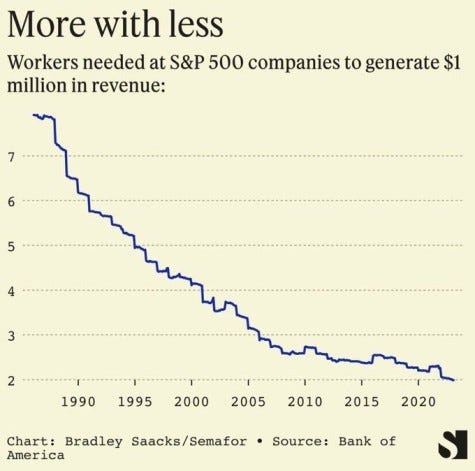
In light of this, many countries are exploring the concept of universal basic income as a potential response. This would involve providing financial support to individuals regardless of employment status.
As Sam Altman aptly stated in our third issue, “The time is rapidly approaching when a single individual, leveraging advanced AI intelligently, can create billion-dollar enterprises without the need for large-scale workforces”.
📰 LATEST NEWS DECODED:
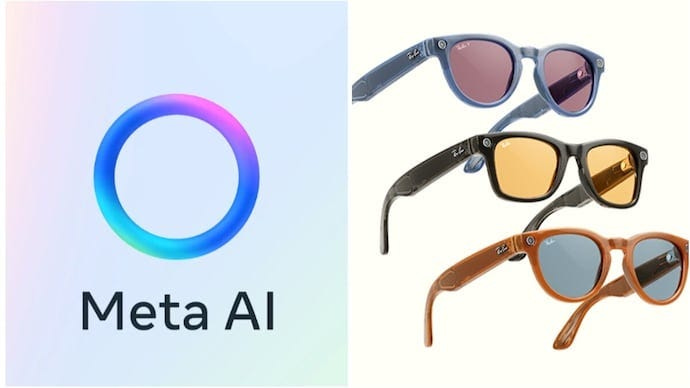
Meta is adding AI to its Ray-Ban smart glasses next month
News Source: The Reverge
Why is it matters
Meta's addition of AI capabilities to its Ray-Ban smart glasses showcases the growing integration of AI into everyday consumer products, offering enhanced features and functionality to users.
Future Effect
Enhanced User Experience: AI-powered features like object and text recognition, along with language translation, can provide users with valuable information and assistance in their daily lives, improving the overall user experience.
Mainstream Adoption of Smart Glasses: By integrating AI, Meta's Ray-Ban smart glasses become more than just a tech accessory, potentially appealing to a wider consumer base and driving mainstream adoption of smart glasses.
AI Innovation in Wearables: Meta's move encourages further innovation in the field of wearable technology, with competitors likely to invest in similar AI-powered features, driving the development of more advanced and user-friendly wearables.
Actionable Steps
Continuous Improvement: Meta should focus on refining the AI capabilities to improve accuracy and reliability. Regular updates based on user feedback and additional use cases can enhance the overall user experience.
Privacy and Ethical Considerations: As smart glasses capture and process user data, ensuring strong privacy and security measures is crucial. Meta should clearly communicate its data handling practices and provide users with control over their information.
Expand AI Functionality: Building upon the initial AI features, Meta can explore additional use cases and applications, such as augmented reality experiences, health monitoring, or personalized recommendations, to make the glasses even more versatile and valuable.
User Education: Providing users with clear instructions, tutorials, and support is essential to help them understand and fully utilize the AI capabilities of the smart glasses.
Collaboration with Developers: Encouraging third-party developers to create apps and services that leverage the AI functionality of the smart glasses can lead to a diverse ecosystem of innovative use cases.
💡 INSPIRING IDEAS:
“We believe that technology is at its very best; at its most empowering when it disappears”
— Jonathan Ive