


🎙️ AUDIO DEEP DIVE OF THIS ISSUE:
Sammy & Mila offer in-depth analysis on each newsletter issue. Subscribe to their podcast on Spotify or any other podcast platform.
Future of Software Development
OpenAI's ChatGPT has dramatically altered our perception of the future. Software development could soon be as simple as using Google Translate. By describing desired software functionality to ChatGPT, developers can receive the corresponding source code in return.
This eliminates the need for in-depth knowledge of coding, server setup experience, database design, and numerous other complexities. The ability to articulate requirements effectively becomes paramount.
“It's not that simple”, I can almost hear fellow developers protest. Allow me to introduce Devin, an artificial intelligence capable of independently writing code.
Beyond coding, AI's potential is vast. It can compose music, write books, create art, aid in cancer research, drive cars, play games, design websites, develop mobile applications, and more—all in the present, not the distant future.
The pace of change is astonishing.
How Do We Adapt to the Future?
Emad Mostaque, founder of StabilityAI, boldly predicts the end of the developer era within five years. This is a stark contrast to our recent focus on teaching coding from kindergarten.
So, what should we teach our children now? What skills will be valuable in the future workforce? Unfortunately, this question is already outdated.
Learning itself is becoming obsolete. Information is no longer hard-won; it's instantly accessible.
Remember the Matrix scene where Neo mastered Kung Fu in seconds? We're living in a world where that's becoming reality.

How do we prepare for a future where intelligence is ubiquitous?
The Industrial Revolution rewarded producers. The Internet era favored data creators. Now, with AI's ability to process vast amounts of data and reason, we're entering an age where raw intelligence might become less valuable.
The future belongs to those who can harness data most effectively. This explains Nvidia's rise to prominence.
Forget Being a Programmer or Entrepreneur, Become a Tech Merchant
Most of us will never be the pioneers behind Nvidia or OpenAI. Creating groundbreaking technology requires an exceptional level of genius, much like expecting everyone to be a scientist. We cannot reasonably aspire to become the next Ilya Sutskever.
For those of us exchanging time for money, pursuing such ambitious goals is impractical. Scientific and technological breakthroughs are the result of years of intense research, development, and countless failures. The odds of success are astronomical. This arduous path is incompatible with a profitable career for most people.
As average people, we cannot be the "extraordinary minority" who invents artificial intelligence. The best we can do is become “technology merchant”.
Who is a Tech Merchant?
Observes current problems, needs and markets and offers the fastest, highest quality and most economical solution to them. It does not have to be innovative, it can produce new solutions using existing technologies. It focuses on rapid profitability and stable growth. It can start with less investment and faster.
Think about successful traders. They excel at identifying significant unmet needs or poorly addressed problems. Their focus lies in developing and managing efficient, high-quality, and cost-effective solutions to these challenges.
I propose applying this approach with a technological emphasis.
While this might sound like tech entrepreneurship, there are crucial distinctions:
Tech Entrepreneur vs. Tech Merchant
Focus:
Entrepreneur: Creates disruptive, innovative products or services, targeting future markets and novel solutions.
Merchant: Leverages existing or underutilized products or services to address current market needs. For instance, adapting a newly released AI API to an existing manual process.
Innovation:
Entrepreneur: Drives innovation, embracing risk for potentially groundbreaking results.
Merchant: Utilizes existing AI capabilities to optimize processes, reach new customers, or improve efficiency.
Growth Strategy:
Entrepreneur: Seeks rapid, exponential growth, often backed by venture capital.
Merchant: Prioritizes stable growth, customer loyalty, and profitability within a specific niche.
Risk Tolerance:
Entrepreneur: Operates in a high-risk, high-reward environment, accepting the possibility of failure.
Merchant: Manages risk by focusing on proven market needs and maximizing profit margins.
Advantages of Technology Merchants
Lower Investment: Merchants can start with less capital by leveraging existing technology (e.g., APIs) and testing market viability quickly.
Faster Profitability: Addressing proven market needs often leads to quicker revenue generation.
For a deeper understanding of this topic, I recommend listening to Y Combinator's podcast episode titled “The Truth About Building AI Startups Today”.
Our current education system, rooted in passive learning, is outdated. It needs to shift towards a proactive, productive model.
Given the rapid pace of technological advancement, it's impossible for consumers to keep up. So, we need individuals who can closely follow these breakthroughs and apply them to solve existing problems – technology merchants.
Education systems should foster environments where students can experiment and develop the skills necessary for this role.
Historically, apprenticeships offered a valuable learning experience. Young people worked alongside skilled craftsmen, tackling real-world challenges under expert guidance. This hands-on approach is more relevant than ever. Village Institutes, with a similar philosophy, serve as a historical example.
It's important to remember that our current education system was designed for the industrial age, with the goal of producing workers for factories and offices.
OpenAI CEO Sam Altman envisions a future where a single individual, leveraging AI effectively, can create billion-dollar businesses without a large workforce. This highlights the urgent need for education reform.
📱 NEXT BIG APPS:
AI for Developers and Designers
Software engineers are getting a powerful new tool (as mentioned above). Devin AI, an autonomous AI assistant from Cognition Labs, is being hailed as an “AI software developer”. This tool can execute blueprints, generate source code, and even benchmark unit tests.
For graphic designers and presenters, SlidesAI is a game-changer. This AI-powered tool simplifies the creation of impressive presentations. It can generate text, images, charts, and even suggest layouts, making the process more efficient and effective.
📰 LATEST NEWS DECODED:
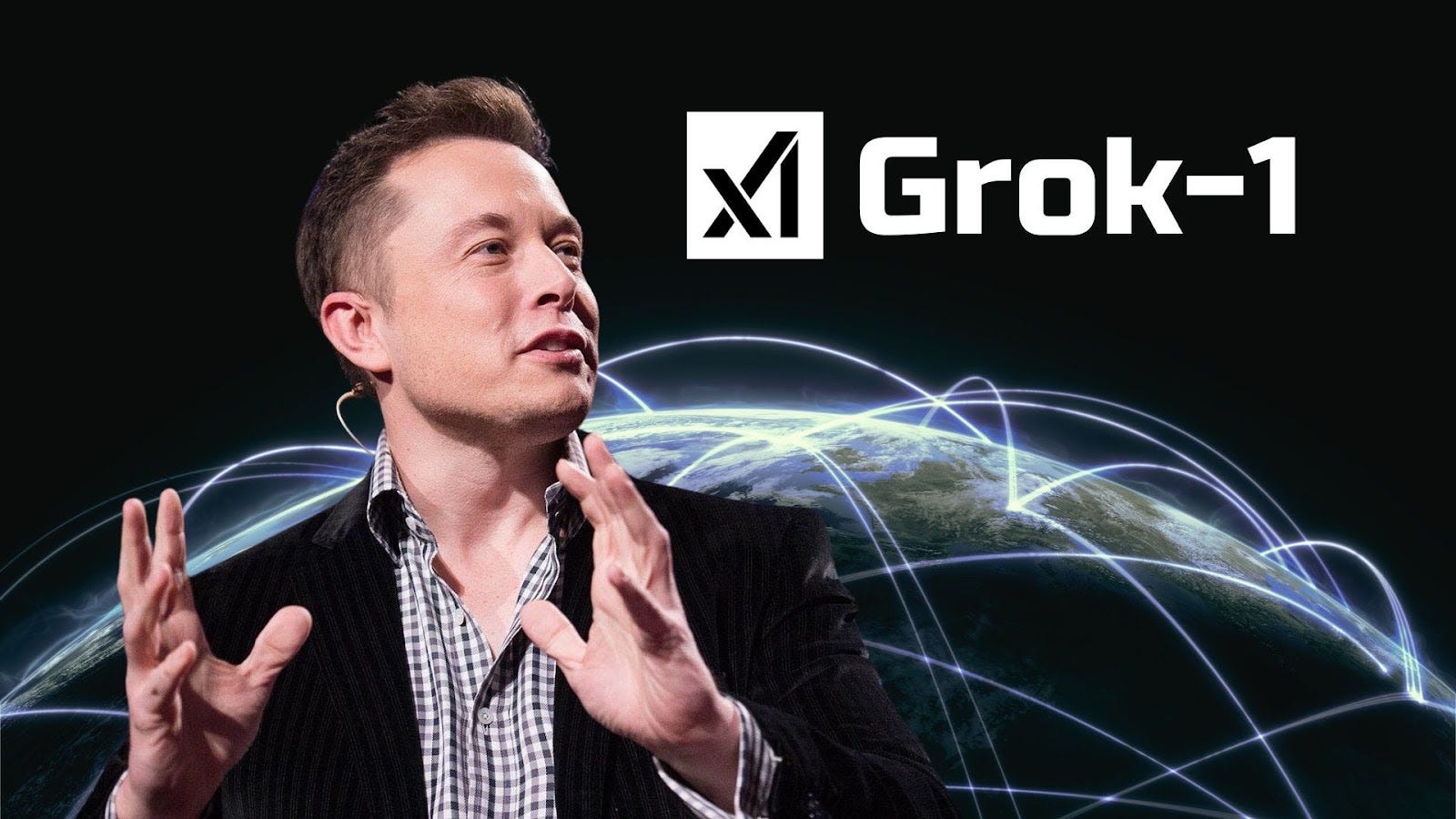
Elon Musk's xAI Open-Sources Grok-1
Sources News : Maginative
Why is it matters?:
Elon Musk's decision to open-source Grok-1, an AI system capable of generating human-like image completions, has significant implications for the AI community and the future of AI development.
Future Effect?:
Accelerated AI Development: By open-sourcing Grok-1, Musk is providing the AI community with a powerful tool to build upon and improve. This can lead to accelerated progress in AI research and the development of even more advanced systems.
Improved Transparency and Trust: Open-sourcing Grok-1 allows for greater transparency and scrutiny of the underlying algorithms and data used to train the model. This can help address concerns about bias, ethical considerations, and the potential misuse of AI technology.
Inspiring Innovation: Making Grok-1 accessible to a wider audience can spark creativity and innovation in various fields, leading to new applications and use cases for AI beyond image completion.
Actionable Steps ?:
Encourage Collaboration: Musk's move sets a precedent for collaboration and open-source development in the AI community. Other organizations and researchers may follow suit, fostering a more open and collaborative environment.
Ethical Guidelines and Oversight: As advanced AI systems become more accessible, establishing ethical guidelines and oversight becomes crucial. This includes addressing concerns related to data privacy, bias, and potential misuse.
Education and Accessibility: Providing educational resources and support to help developers and enthusiasts understand and utilize Grok-1 effectively can lower the barrier to entry and encourage diverse participation in AI development.
Continuous Improvement: Open-sourcing allows for ongoing contributions and improvements to the model, ensuring that Grok-1 remains a state-of-the-art system and a valuable resource for the community.
Responsible Adoption: As AI becomes more powerful and accessible, organizations and individuals must prioritize responsible adoption, considering the potential impact on society and individuals' lives.
💡 INSPIRING IDEAS:
“It does not matter how slowly you go as long as you do not stop”
— Confucius