


🎙️ AUDIO DEEP DIVE OF THIS ISSUE:
Sammy & Mila offer in-depth analysis on each newsletter issue. Subscribe to their podcast on Spotify or any other podcast platform.
💡 INSPIRING IDEAS:
The Democratization of Intelligence
A deep conversation between Emad Mostaque and Tom Bilyeu about artificial intelligence (watch here) sparked a profound and unsettling thought.
Technology has radically transformed various fields by making them accessible to everyone. This democratization has shifted power from elites to the masses.
We witnessed the democratization of information with Web 1.0, followed by media with Web 2.0, and finally, the economy with Web 3.0.
Now, technology is on the brink of democratizing intelligence through advancements in artificial intelligence. This prospect is deeply concerning.
History suggests that technology can erode the value of what it democratizes. If intelligence becomes widely accessible and loses its perceived value, what kind of world will we inhabit?
A world where logical reasoning holds little weight? A world where less intelligent individuals can manipulate situations to their advantage using artificial intelligence?
If intellectual and communicative superiority no longer matter, how can conflicts be resolved peacefully?
I fear the answer might be a reliance on brute force, intimidation, or even weaponry.
What are your thoughts? How do you envision a world where everyone possesses high intelligence?
🧙♂️ TIPS & TRICKS:
Marketing to the Team
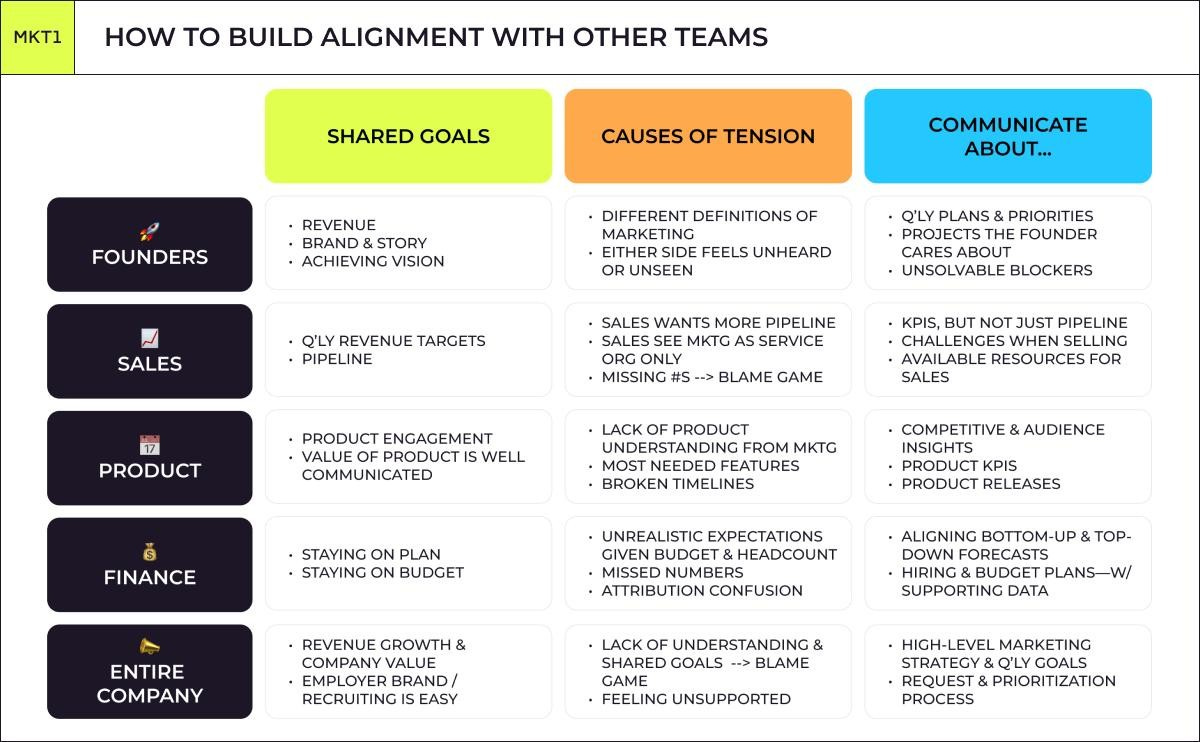
A hallmark of successful startups is a singular, shared company goal. The entire team is united behind this objective, functioning as a cohesive unit.
We often underestimate the potency of this "team focus." Alain de Botton, in “Religion for Atheists”, argues that atheists can learn from religious rituals. Repeatedly engaging in rituals, like prayer, reinforces beliefs over time. Similarly, consistent communication of a shared goal can transform it into a deeply held conviction within a team.
We mistakenly believe that annual goal reminders suffice to maintain team enthusiasm. However, for a goal to become a catalyst for success, it must be embraced as a fundamental belief. This requires frequent, almost ritualistic repetition.
Consistently reinforcing the goal without becoming monotonous or awkward is essential. The article by Emily Kramer and Kathleen Estreich offers valuable insights into effective communication strategies, including messaging, audience, and delivery techniques.
📊 TRENDS, RESEARCH & REPORTS:
Wasted Potential: The Age of Dopamine Culture
I find myself at a pivotal juncture, a point of introspection that has drawn me to confrontational texts. Unscripted is one such work that has jolted me awake.
It paints a stark portrait of modern existence as a scripted drama, a life confined by the expectations and trajectories imposed by family, education, and societal norms.
The author posits that to live a life thus predetermined is to squander one’s potential, to exist as a mere character in a play written by others.
Our contemporary world, saturated in consumerism, amplifies this predicament. We are enticed by a relentless pursuit of material gratification, finding fleeting solace in superficial pleasures.
The allure of binge-watching or exotic vacations masks a deeper malaise, a sense of emptiness that gnaws at the core of our being. While Unscripted advocates for breaking free from these shackles and authoring one’s own life narrative, it offers scant guidance on how to accomplish this daunting task.
Ted Gioia’s “The State of the Culture, 2024” provides a complementary perspective, illuminating the cultural wasteland we inhabit.
He deconstructs the hollow notion of “culture” in our age, revealing it as a mere veneer masking a pervasive shallowness.
What was once a rich tapestry of slow-paced, contemplative experiences has been reduced to a fast-food equivalent of cultural consumption. Yet, the most insidious development is the rise of “dopamine culture”, an ecosystem nurtured by social media and digital platforms that exploit our psychological vulnerabilities.

The architects of this digital landscape, based in Silicon Valley, are complicit in creating a culture of addiction. Driven by the relentless pursuit of user engagement and retention, they design products that hijack our attention spans and manipulate our desires.
We, the creators, are caught in a moral dilemma, torn between artistic integrity and the demands of a market that thrives on superficial gratification.
The metrics by which our work is measured —engagement, clicks, and likes—encourage a race to the bottom, prioritizing addictive experiences over meaningful content.
The consequences of this cultural shift are profound and far-reaching.
We are witnessing a generation adrift, yearning for authentic connection and purpose yet trapped in a cycle of distraction and superficiality. The erosion of critical thinking, the decline of empathy, and the fragmentation of society are all symptoms of a culture in captivity.
It is imperative that we break free from this gilded cage and reclaim our humanity.
📰 LATEST NEWS DECODED:
China Begins Testing AI Chatbot for Brain Surgeons in Hospitals
News Source: Bloomberg
Why is it Matters
China's adoption of AI in healthcare, specifically brain surgery, signals a significant step towards revolutionizing the industry and improving patient care.
Future Effect
Increased Accuracy and Efficiency: AI chatbots can provide instant access to vast medical knowledge, improving diagnosis and treatment accuracy.
Enhanced Patient Care: With AI assistance, surgeons can make more informed decisions, leading to potentially better patient outcomes and increased patient satisfaction.
Widespread Adoption: Successful implementation in these hospitals may lead to expanded use across China and globally, driving further development and innovation in healthcare AI.
Actionable Steps
Rigorous Testing and Evaluation: Ensure thorough testing and evaluation of the AI chatbot's performance, accuracy, and ethical considerations.
Collaboration and Feedback: Encourage collaboration between medical professionals and AI developers to fine-tune the system and address any concerns or limitations.
Ethical and Legal Framework: Establish clear guidelines and regulations for the use of AI in healthcare to ensure patient privacy, data protection, and ethical standards are maintained.
Continuous Improvement: Regularly update and improve the AI model with the latest medical knowledge and advancements to ensure its effectiveness and relevance over time.
Global Collaboration: Share findings and best practices with the international medical community to accelerate the development and adoption of healthcare AI globally.
💡 INSPIRING IDEAS:
“A year from now you may wish you had started today”.
- Karen LAMB