


A customer walks into a neighborhood café every morning.
The owner knows her order, asks how her weekend went and listens when she suggests adding a larger table near the window.
She’s exactly the kind of customer any business would appreciate.
She also knows the café better than almost anyone else.
Which raises an interesting question: Does she experience the business the same way a first-time visitor does?
Who Gets to Shape a Business?
Recently, someone on Reddit shared an analysis of 185 app founder interviews.
According to the analysis, 161 founders explained how they found their first users. Of those, 56 said they started by posting their own content, while 27 began in communities such as Reddit, Discord or Facebook groups.
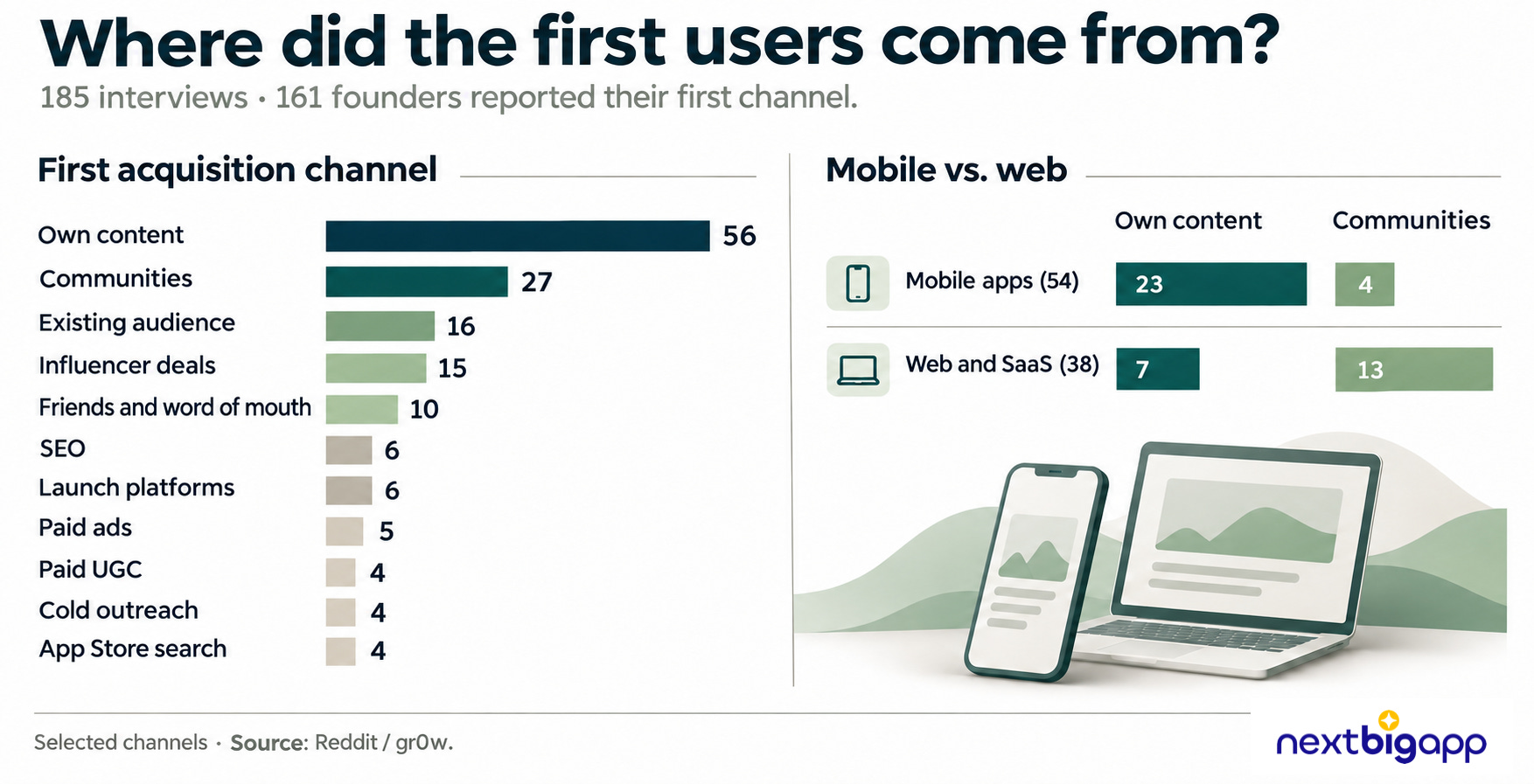
Those numbers come from selected interviews. They don’t tell us which channel works best for every business.
But they point to a question that matters long after a company finds its first customers.
Who finds you, who stays close to you, and whose feedback reaches you?
For a new app, the answer may depend on the founder’s audience or the online community where they launched.
For an established business, it might be the regular customers who visit every week, the clients who have the owner’s phone number, or the people who reply to every email.
These relationships are valuable. They can also shape what the business learns to notice.
The People Who Stay Know How Things Work
Let’s go back to the café.
The regular customer knows when it gets busy. She knows where to order, which pastries sell out early and how long the coffee usually takes.
A first-time visitor knows none of that.
They might stand near the entrance, unsure whether to find a table or order at the counter. They might not understand the menu. They might leave because every table looks occupied, without realizing there is another room in the back.
The regular customer is well placed to suggest a better table.
The first-time visitor is better placed to reveal an unclear entrance.
Neither perspective is more honest. They answer different questions.
The difficulty is that the regular customer is much more likely to tell you what she thinks.
The person who couldn’t work out where to order may simply walk away.
Good Feedback Has a Blind Spot
Think about the customers you hear from most often.
They may have worked with you for years. They know the process, trust your team and understand why certain things take time.
When they ask for a change, they usually have a reason. Their feedback can help you keep the people who already support your business.
But familiarity can hide friction.
A long-term client knows which person to call when an invoice is confusing. A new client may see the same invoice, hesitate to ask and pay late.
A regular at a salon knows to book two weeks ahead. A new customer may see no available appointments online and assume the business isn’t interested in them.
In each case, the existing customer has learned how to make the experience work.
The new customer is still deciding whether it’s worth the effort.
The absence of complaints doesn’t always mean the absence of problems. Sometimes it means the people who encountered the problem never became customers.
The Quiet Customers Leave Less Evidence
Most businesses don’t receive a neat report explaining why someone decided not to buy.
A person visits your website and doesn’t call.
Someone asks for a quote and never replies.
A customer comes once and doesn’t return.
There could be many reasons. The price may be too high. The timing may be wrong. They may have chosen a competitor. Or they may not have been the right customer for you in the first place.
You can’t assume every departure is caused by a problem you need to fix.
But if you only hear from the people who stayed, you may never learn which of those possibilities is worth investigating.
And that can affect decisions far beyond customer service.
Your Feedback Shapes What You Build Next
Imagine a local accounting firm that has worked with the same small business clients for years.
Those clients value detailed advice and are comfortable sending documents by email. They know the team and trust the process.
So when the firm asks what could be better, clients request more frequent updates and deeper reporting.
Those might be excellent improvements.
But imagine a prospective client who needs help urgently and visits the firm’s website. They can’t tell what the service costs, what happens after they get in touch or how quickly someone will respond.
They leave without asking for a report.
If the firm listens only to its current clients, it may keep making the service better for people who already understand it while overlooking what new customers need to take the first step.
This is a hypothetical example. The point isn’t that every accounting firm has this problem. It’s that different customers see different parts of the same business.
Look Beyond the Usual Conversation
You don’t need to stop listening to loyal customers. You need to add a few perspectives to the conversation.
Start with people at different stages:
Ask a new customer what almost stopped them from buying.
Ask someone who requested a quote but didn’t proceed whether anything was unclear. Give them an easy way to decline the conversation.
Watch a person unfamiliar with your business try to find your prices, book an appointment or contact you.
Compare what new customers ask with the questions your regulars bring up.
You may hear things you already know. You may also discover that a process your team considers obvious takes a new customer several attempts to understand.
One conversation won’t prove how common a problem is. But it can tell you where to look more closely.
Decide Whose Experience You Want to Improve
Your loyal customers may be the heart of your business. Serving them better can be the right priority.
You might decide that attracting a broader audience isn’t worth changing the experience they love.
Or you might find that a small change, such as clearer booking instructions or a simpler first invoice, makes life easier for newcomers without taking anything away from regulars.
The goal isn’t to follow every suggestion.
It’s to understand whose experience each suggestion represents, and whose experience you haven’t heard yet.
The customers closest to your business can tell you why they stay.
The people a little further away may help you understand why others never make it through the door.