


There is a South Korean documentary called Meeting You that I can’t stop thinking about.
In it, a mother puts on a VR headset and a pair of haptic gloves. She’s standing in a green-screen studio, but in her eyes, she’s back in a park.
Suddenly, her seven-year-old daughter, who passed away years prior, runs up to her. The mother reaches out, her hands trembling, trying to touch a digital memory that feels more real than the world around her.
She cries. She talks to her. She gets a moment she thought was stolen forever.
It is one of the most heartbreaking and beautiful uses of technology I have ever seen. And it changes everything about how we view the “business” of AI.
This Isn’t About Immortality. It’s About the Ache
When we talk about AI and death, we often get caught up in the “creep factor” or the sci-fi dream of living forever.
We focus on the tech.
The Microsoft patents for chatbots or the StoryFile AI that allowed Marina Smith to speak at her own funeral.
But if we look closer at that mother in the VR headset, we see the truth: This isn’t about the dead. It’s about the living.
Grief is a heavy, messy, and deeply lonely process. For centuries, we’ve relied on faded photos and static memories.
Now, for the first time in human history, we have the tools to make those memories interactive.
We aren’t just looking at a photo of a loved one; we are hearing their laugh again, or asking for the advice they never got to give.
Building with Empathy, Not Just Code
As an entrepreneur, I often talk about “disruption” and “market gaps”. But when it comes to Grief-Tech, we have to lead with our hearts. We aren’t just building products; we are handling people’s most sacred and fragile emotions.
The vital point: the “Digital Pyramid”.
Just as the pharaohs built monuments to ensure they were never forgotten, we are now building digital legacies. But the real “gold” here isn’t in creating a perfect AI clone (which, let’s be honest, can be terrifying).
The real opportunity is in softening the blow of loss.
The New Frontier of Human Connection
If you’re looking to build in this space, stop asking “How can I make an AI live forever?”
Instead, ask: “How can I help a daughter hear her father’s wisdom one last time?”
The Interactive Legacy: Imagine an AI that doesn’t “pretend” to be the deceased, but acts as a guardian of their stories. A digital scrapbook that can answer questions like, “What was Mom’s favorite song when she was my age?”
Healing Through Presence: Tools like the ones used by that mother in South Korea can provide “closure sessions”—safe, controlled environments to say the things left unsaid.
The Ethical Guardian: There is a massive need for platforms that handle “Digital Wills” with dignity. Who owns your digital heartbeat? Who ensures your AI likeness isn’t exploited? This is a space where trust is the only currency that matters.
A Weighted Responsibility
This technology is a double-edged sword. Psychologists worry that staying “connected” to a digital version of a loved one might make it harder to let go. And they’re right to be concerned.
That’s why the next great AI companies in this space won’t just be run by engineers. They’ll be run by philosophers, grief counselors, and people who understand the sanctity of a human life.
We have the chance to ensure that no one’s story truly ends when they “log off” for the last time.
We can build the digital pyramids that don’t just stand tall, but offer a hand to those still walking.
If you could preserve one specific interaction with someone you’ve lost, a piece of advice, a joke, a bedtime story, what would it be?
Reply and let me know. Let’s talk about the human side of the machine.
The 2026 Grief-Tech Market Map & Revenue Sheet
The $35.8B market emerging at the intersection of grief and technology. We’ve mapped the 2026 Grief-Tech landscape to show you how “Digital Immortality” has moved from a sci-fi dream to a scalable, deeply impactful business model.
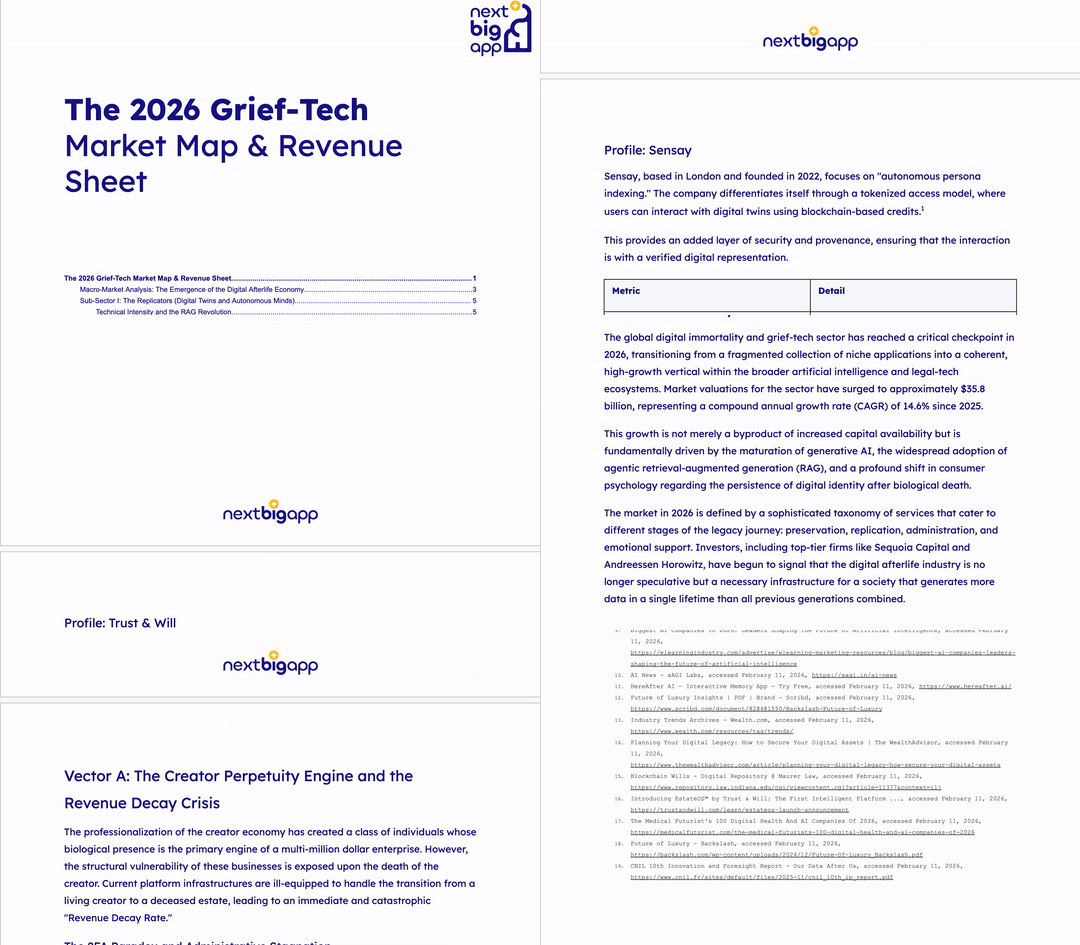
Inside the full Premium Sheet, we’re handing you:
The 35+ Power Players: A curated look at the companies turning “final goodbyes” into “digital presence”, from Delphi to Eternos.
The Empathy-Driven Revenue Model: A breakdown of how to price for the most sensitive moment in a customer’s life without losing their trust (SaaS vs. Concierge benchmarks).
The “Grief-Gap” Analysis: Three specific areas where current tech is failing mourning families and where the next generation of founders will build.