


You probably know Ryan Reynolds as an actor.
Deadpool. Free Guy. The Proposal…
The sarcastic Canadian guy who has somehow turned playing slightly different versions of Ryan Reynolds into a very successful Hollywood career.
Fair enough.
But while most of us were watching his movies, Reynolds was quietly building a second career.
And it may be even more interesting than the first.
He became an entrepreneur.
Then a marketer.
Then the co-founder of a creative company.
He bought pieces of companies most people had barely heard of, plugged his own attention and creativity into them, and helped turn them into unusually valuable brands.
Aviation Gin was later included in a transaction worth up to $610 million.
Mint Mobile became part of a $1.35 billion acquisition by T-Mobile.
But Reynolds wasn’t simply the celebrity appearing at the end of somebody else’s advertising process.
He was an owner.
He shaped the creative.
He helped write the ads.
He understood the audience.
He had his own distribution.
And, crucially, he could move before a normal company had finished scheduling the meeting about whether it should move.
The interesting part is how he got there.
Because Ryan Reynolds did not learn marketing at business school.
He learned it because Hollywood kept telling him no.
Before the Gin, There Was Deadpool
Reynolds spent roughly a decade trying to get Deadpool made.
It wasn’t an easy sell.
Deadpool was violent, foul-mouthed, self-aware, R-rated and constantly broke the fourth wall.
In other words, not exactly the safest foundation for a giant studio superhero franchise.
Reynolds kept pushing anyway.
Eventually, he and the team were allowed to create a few minutes of test footage showing what their version of the character might actually look like.
Then the footage sat there.
The movie still wasn’t getting made.
Until July 2014, when something strange happened.
The test footage appeared on the internet.
Fans went crazy.
Suddenly the studio wasn’t evaluating an abstract pitch anymore.
There was visible evidence of demand.
For more than a decade, Reynolds joked about who might have leaked the footage.
Then, in 2025, he finally admitted it.
He did.
Reynolds said he had listened to his instinct that people would be interested, even though he knew leaking it was the wrong thing to do.
Whatever you think of the ethics of the leak, it reveals something fascinating about how his brain works.
He couldn’t win the argument inside the conference room.
So he changed the environment outside the conference room.
He didn’t convince the gatekeeper.
He created enough demand that the gatekeeper had to pay attention.
That may have been Reynolds’ first great marketing lesson.
And he hadn’t even started a marketing company yet.
The Movie That Accidentally Created a Marketer
Eventually, Deadpool got made.
But compared with the giant superhero productions around it, the team had relatively few resources.
Reynolds later described the experience as having to make every dollar feel like ten.
So they replaced spectacle with character.
Then they applied the same thinking to marketing.
Reynolds took the Deadpool suit from the set and started shooting inexpensive promotional material with George Dewey, who would later become his partner at Maximum Effort. Reynolds has described this period as the origin of his move into marketing.
Instead of making only conventional trailers, they treated advertising as entertainment.
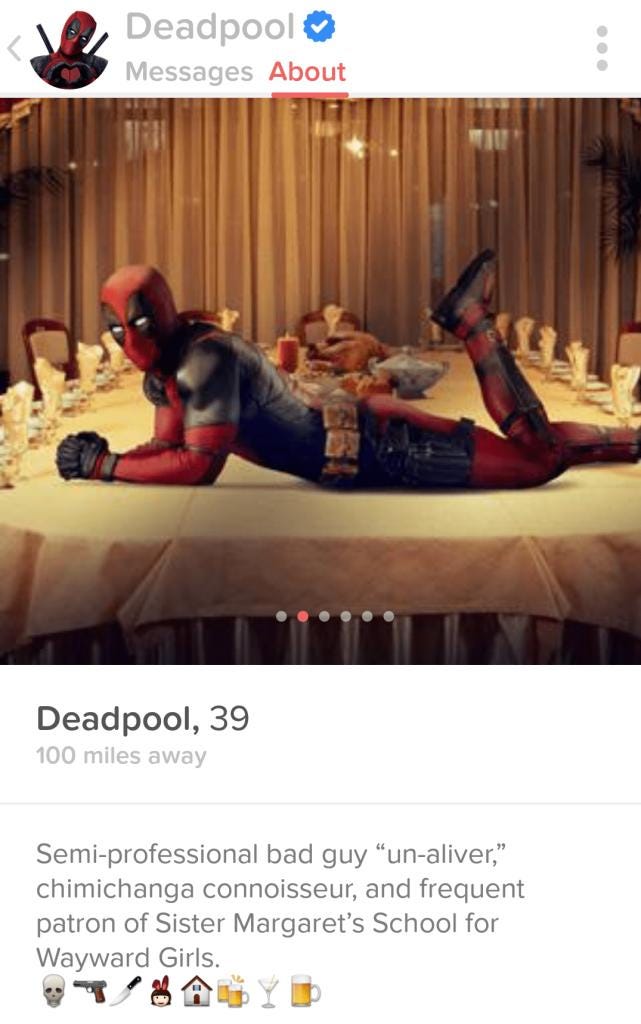
Deadpool appeared on Tinder.
The violent superhero movie was advertised as if it were a Valentine’s Day romance.
There were ridiculous billboards.
Public-service announcements.
Cheap internet videos.
Reynolds moved almost seamlessly between actor, character and advertiser.
And people voluntarily shared the marketing.
That was the breakthrough.
Marketing didn’t have to interrupt the entertainment.
Marketing could be the entertainment.
The lack of resources had forced Reynolds and Dewey to discover a different way of creating attention.
And it worked.
Deadpool became, at the time, the highest-grossing R-rated movie ever.
But Reynolds walked away with something arguably more valuable than another successful movie.
He had learned how to manufacture attention.
Then He Realized Attention Was an Asset
This is where the story becomes much more interesting than “celebrity starts a side business”.
Most celebrities already possess enormous amounts of attention.
But historically, they have monetized it in a very simple way.
A company pays the celebrity.
The celebrity appears in an advertisement.
Maybe they make an Instagram post.
The celebrity gets a cheque.
The campaign ends.
The company owns the product, the customer relationship and most of the long-term upside.
Reynolds gradually arrived at a more interesting model.
Don’t just rent your attention to brands.
Own the asset your attention makes more valuable.
In 2018, he bought an ownership stake in Aviation Gin.
Even the origin story feels strangely Reynolds-like.
He discovered Aviation while drinking Negronis in Vancouver. He kept ordering the same drink, realized the thing he particularly liked was the gin, and eventually found his way into the company.
Once involved, Aviation said Reynolds would play an active role in the business and oversee creative direction; Reynolds also talked about wanting to participate in marketing, sales and distribution.
Think about what had changed.
If Reynolds made a brilliant commercial for somebody else’s gin, he could get paid for a commercial.
If Reynolds made millions of people care about his gin, he could increase the value of an asset he owned.
Marketing was no longer simply a service.
It became a mechanism for equity creation.
Around the same period, Reynolds and Dewey formalized what they had learned during Deadpool into Maximum Effort.
Reynolds later described the company as something that happened almost by accident: they had developed a way of marketing Deadpool, then needed to market Aviation, and suddenly found themselves running a marketing business.
Now the machine was coming together.
Reynolds had:
Attention.
Creative ability.
Distribution.
A marketing company.
And equity in the thing being marketed.
That combination is much more powerful than celebrity endorsement.
And it reveals something Reynolds understood unusually early.
His Real Asset Wasn’t Fame. It Was Distribution.
There is an obvious objection to this entire story.
Of course Ryan Reynolds could do this. He’s Ryan Reynolds.
Correct.
Reynolds started with an unfair advantage almost no entrepreneur has.
Millions of people already knew his face.
Entertainment media followed what he did.
A single post from his account could reach more people than many companies could reach with enormous advertising budgets.
Pretending otherwise would make the whole story useless.
But Reynolds understood something about fame that many famous people don’t.
Fame is not merely attention. Fame is distribution.
And distribution is an asset.
Most celebrities rent that distribution out.
Reynolds connected his distribution to things he owned.
Now a viral joke didn’t merely earn likes.
It could introduce millions of people to Aviation Gin.
A clever video could generate awareness for Mint Mobile.
A cultural moment could become media without buying that media.
His personality became part of the companies’ distribution infrastructure.
That is a much smarter model.
And it doesn’t only apply to celebrities.
Because although you probably don’t have Ryan Reynolds’ distribution... you can build your own version of it.
You Don’t Need 50 Million Followers
Maybe 3,000 people read your newsletter. Maybe 12,000 people follow you on LinkedIn. Maybe 40,000 people watch your YouTube channel. Maybe 600 people genuinely trust what you recommend.
It isn’t Ryan Reynolds scale.
That misses the point.
The important question is:
Can you reach the same people again tomorrow without asking Facebook or Google for permission and paying for every impression?
If the answer is yes, you own some distribution.
And once you own distribution, something fundamental changes.
When you launch a new product, you don’t begin at zero.
When you have an idea, there is already someone listening.
When you learn something useful, you already know where to publish it.
When you build your second product, the audience from your first product can come with you.
You are carrying distribution with you.
This is one of the most valuable assets a modern entrepreneur can build.
Reynolds figured it out at celebrity scale.
A generation of entrepreneurs is beginning to figure it out at individual scale.
But Reynolds added another ingredient.
Speed.
The Ad That Had a 36-Hour Expiration Date
At the end of 2019, Peloton released a Christmas commercial called The Gift That Gives Back.
The premise was simple.
A husband gives his wife a Peloton bike.
She documents a year of workouts and later shows him how much the gift changed her life.
The internet had... other interpretations.
People found the commercial awkward, dystopian, sexist, controlling or some combination of the four.
Memes exploded.
Hot takes followed.
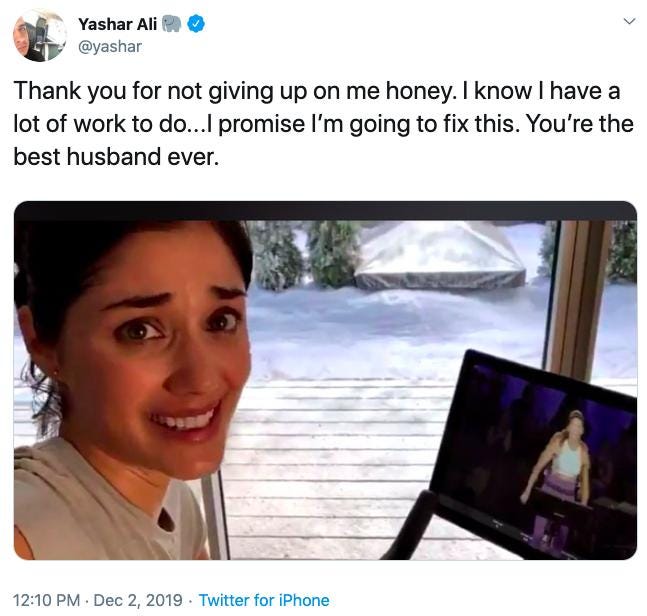
The actress at the center of the commercial, Monica Ruiz, suddenly became known as the “Peloton Wife”.
Most brands would have watched the internet drama from the sidelines.
Reynolds saw an opportunity.
His team began trying to find Ruiz within hours.
They eventually reached her.
Then they wrote an Aviation Gin commercial.
Shot it.
Edited it.
And released it.
According to Reynolds: The whole thing took roughly 36 hours.
In the ad, Ruiz sits at a bar between two friends looking like she’s just escaped something.
Three martinis sit on the table. One friend tells her she’s safe. They toast to “new beginnings”.
Then Reynolds publishes the commercial with four words:
Exercise bike not included.
The internet loved it.
But I think most people learned the wrong lesson from the campaign.
They saw the joke. Reynolds saw the window.
Reynolds Himself Has Now Formalized the Idea
There is a nice twist to this story.
Fastvertising has moved from an eccentric Ryan Reynolds marketing trick to something people are seriously studying.
In the January–February 2026 issue of Harvard Business Review, Reynolds coauthored “Marketing at the Speed of Culture” with Harvard Business School professor Ayelet Israeli, Leonard Schlesinger and Matt Higgins.
Their argument is not simply “be funny quickly”.
Successful fastvertising requires organizational conditions that allow people to respond quickly: empowered teams, streamlined governance, relevance over unnecessary production polish, and enough human judgment to know when a cultural moment should or absolutely should not become advertising.
They also make an important point about AI: generative tools can accelerate production, but human judgment remains critical.
Which gets us to the real lesson.
Humor Wasn’t Scarce. Speed Was.
Thousands of people made funny Peloton jokes that week.
Humor was abundant. Execution speed was scarce.
The Aviation ad worked because the joke arrived while the joke still mattered.
That’s a very different way to think about cultural marketing.
Attention has a half-life.
A cultural moment does not maintain the same value forever.
At hour one, people discover it.
At hour twelve, people share it.
At hour thirty-six, everybody has an opinion.
A week later, your beautifully produced brand response can already feel like someone explaining an old meme.
Modern marketers obsess over: CAC. CPM. CTR. ROAS. Conversion rate.
I think they should start measuring another number.
TTP: Time to Publish.
How much time passes between: “We should do something with this” and published.
That number rarely appears on a marketing dashboard. It should.
Because in a world where attention moves quickly: Latency is a cost.
Founder-Led Marketing’s Hidden Advantage
Founder-led marketing is usually explained with one word: Authenticity.
People trust people more than corporations.
A founder has a real voice. Customers like seeing the person behind the product. All true.
But I think authenticity is only half of the advantage.
The other half is much more mechanical. Decision compression.
Think about the traditional process.
Someone notices an opportunity.
Someone writes a brief.
A manager reviews it.
Brand reviews it.
An agency gets involved.
The agency produces concepts.
Marketing chooses one.
Legal reviews it.
Management asks for a safer version.
Someone schedules another meeting.
Then eventually somebody publishes it.
Every handoff adds latency.
Now compare that with a founder who possesses taste, authority and proximity to the customer.
Idea. Decision. Publish.
Sometimes the entire loop occurs inside one person’s head. That is extraordinarily powerful.
Not because founders are automatically smarter. Many aren’t.
But when ownership + taste + authority sit close together, companies can move at a completely different speed.
Reynolds wasn’t simply the face of Aviation.
He was part of a low-latency decision system.
Then He Ran the Experiment Again
Aviation could be dismissed as a special case.
Celebrity. Alcohol. Funny ads.
Fine.
Then Reynolds bought an ownership stake in Mint Mobile in November 2019.
Discount wireless plans are considerably less sexy than gin.
Which makes Mint a much more interesting experiment.
The playbook remained remarkably similar.
Reynolds appeared directly in the advertising.
The production was often deliberately inexpensive.
The writing was self-aware.
The company made jokes about being a company trying to sell you something.
One Mint campaign proudly centered on a commercial that cost just $500.
Another had ChatGPT write the commercial. But perhaps the purest demonstration of the system happened in 2022.
Comedian Dave Foley tweeted Reynolds asking whether, if he switched to Mint Mobile, he could appear in one of the company’s ads.
Reynolds accepted.
George Dewey called Mint while heading to the set.
The concept was aligned in minutes.
The ad was written on the move.
Shot. Edited. Published.
From tweet to finished commercial: six hours.
Six hours.
There are companies that need six hours to decide who should attend the kickoff meeting.
The Acquisitions Matter. But Not for the Reason You Think
Eventually, the numbers became enormous.
In 2020, Diageo agreed to acquire Aviation Gin and Davos Brands in a transaction worth up to $610 million: $335 million upfront plus as much as $275 million tied to future performance.
Important detail: That number did not represent Aviation Gin alone.
The acquisition also included other brands in the Davos Brands portfolio. Reynolds retained an ongoing interest in Aviation.
Likewise, T-Mobile announced in 2023 that it would pay up to $1.35 billion for Ka’ena Corporation.
Again, important detail: That was not Mint Mobile alone.
Ka’ena also included Ultra Mobile and Plum.
The transaction closed on May 1, 2024.
So the lazy version of this story would be:
Ryan Reynolds made funny commercials and sold two companies for nearly $2 billion.
That’s a nice LinkedIn fairy tale.
It isn’t accurate. Product mattered. Pricing mattered. Distribution mattered. Teams mattered. Market timing mattered.
But the marketing capability clearly mattered too.
When T-Mobile completed the Ka’ena acquisition, it specifically pointed to Mint’s unusually strong direct-to-consumer marketing capabilities as one of the things that had fueled its success.
That’s the more interesting story.
Reynolds repeatedly connected: ownership + attention + creative control + distribution + speed.
And that combination created an unusually efficient growth machine.
Your Approval Process Is Part of Your Media Budget
Now imagine two brands notice exactly the same cultural opportunity.
Brand A can publish tonight.
Brand B needs nine days. Brand B may have: The better agency. Better designers. More research. A larger budget. A 140-page brand guideline.
It doesn’t matter.
Brand A owns the moment.
Which leads to an uncomfortable idea: Your approval process is effectively part of your customer acquisition cost.
We just don’t account for it that way. We measure campaigns that run. We measure campaigns that fail.
We do not measure brilliant campaigns that never existed because Legal could only join the meeting next Tuesday.
Nobody’s dashboard says:
Cultural moments lost because Steve was on vacation: 17.
But the cost is real.
Someone else captured the attention. You paid for safety with distribution.
There Is a Point Where Professionalism Becomes Latency
Companies add processes for sensible reasons; Consistency. Quality. Compliance. Legal protection. Risk management. Brand safety.
Initially, the processes help.
Then another stakeholder joins. Another approval. Another recurring meeting. Another document.
Eventually something strange happens.
Everyone contributes to the decision. Nobody can make the decision.
The work becomes more professional. The organization becomes less capable of acting. And the incentives push companies naturally in this direction.
A visible mistake has an owner. A missed opportunity usually doesn’t.
Nobody gets fired because an advertisement that never existed failed to go viral. So companies accumulate defensive processes.
Every individual layer feels rational. Together they create massive latency. And research suggests that slow does not necessarily mean better.
McKinsey found that only 48% of surveyed managers said their organizations consistently made decisions quickly, while just 37% said decisions were both high-quality and fast.
More surprisingly, organizations that made decisions quickly were around twice as likely to report high-quality decisions as slow decision-makers.
A much broader meta-analysis published online in 2024 examined 127 studies and 239 effect sizes and found that decision speed, implementation speed and competitive-response speed were all positively related to firm performance overall.
The lesson isn’t: Make every decision quickly.
The lesson is: Stop making reversible decisions travel through systems designed for irreversible ones.
A billion-dollar acquisition deserves friction.
A topical Instagram video probably doesn’t need six executive approvals.
AI Just Moved the Bottleneck
This is where the Reynolds story becomes much more important in 2026.
For decades, production itself was expensive.
Research took time. Writing took time. Design took time. Editing took time. Video took a lot of time.
Companies built enormous organizations around those constraints.
Then generative AI arrived.
In a study involving 758 Boston Consulting Group consultants, people using GPT-4 on tasks within the model’s capabilities completed work more than 25% faster, completed over 12% more tasks, and produced work rated more than 40% higher in quality.
Another study covering more than 5,000 customer-support agents found an average productivity improvement of roughly 14% after workers received generative-AI assistance.
And those are relatively early examples.
Today, a tiny team can research markets, write copy, produce images, generate voice, edit video, create landing pages and iterate on dozens of concepts at speeds that would have sounded absurd a few years ago.
Fantastic.
Now imagine this workflow:
Research: 5 minutes
Concepts: 10 minutes
Copy: 30 seconds
Images: 3 minutes
Video: 20 minutes
Management approval: 11 days
What exactly did we accelerate?
Nothing meaningful.
We optimized the part of the system that was no longer the bottleneck.
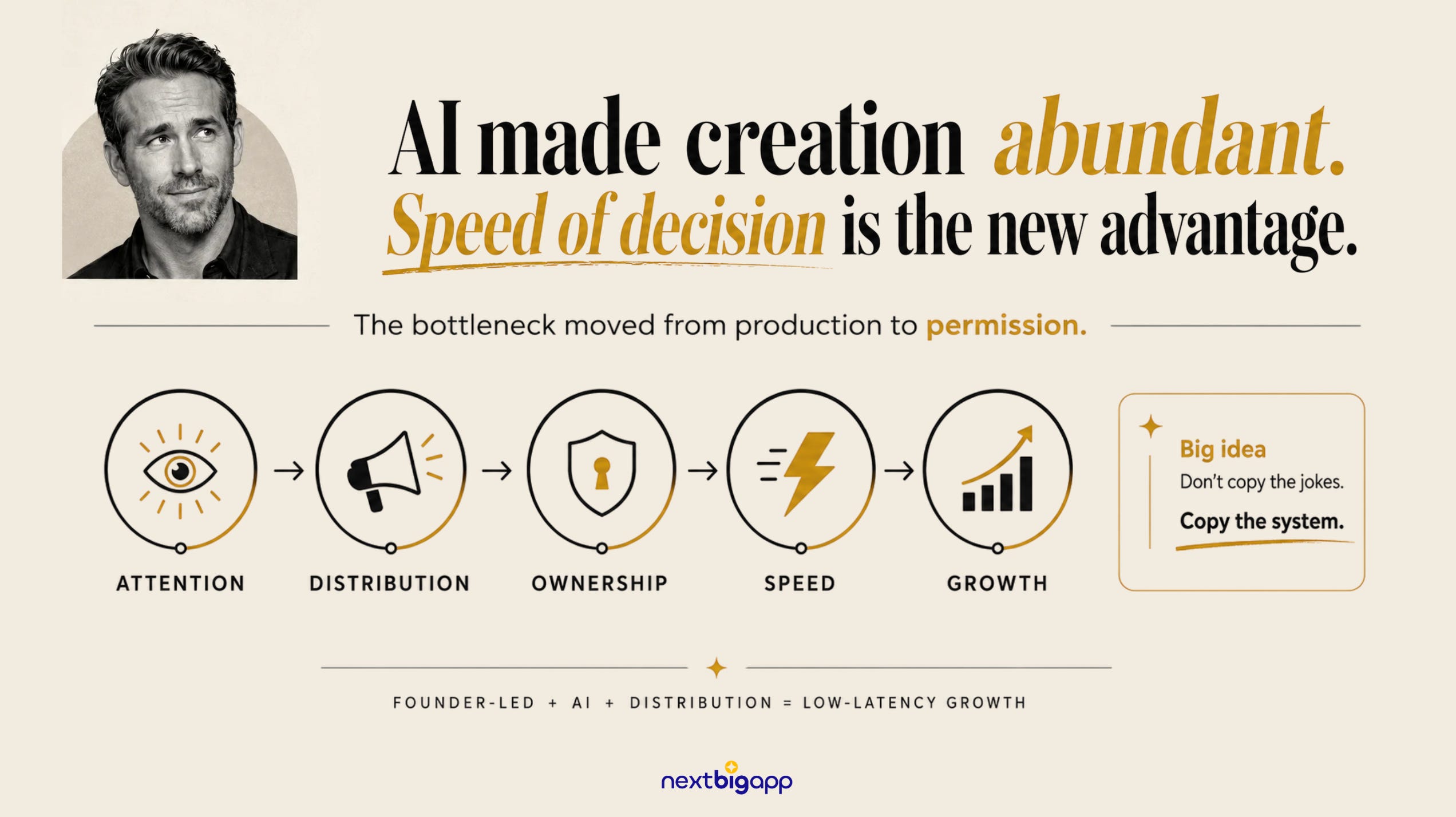
The bottleneck moved. From production to permission.
Companies are going to spend millions making employees five times faster with AI... and then feed their output into the same organizational architecture designed when producing a campaign took three months.
It’s like installing a Formula 1 engine and driving it through Istanbul traffic at 6 p.m.
Technically faster. Practically stationary.
Reynolds Now Has a Name for It: Fastvertising
There is a nice closing loop to this story.
What began with a frustrated actor trying to get Deadpool made eventually became an actual management concept.
In the January–February 2026 issue of Harvard Business Review, Ryan Reynolds co-authored an article with Harvard Business School professors Ayelet Israeli and Leonard Schlesinger and investor Matt Higgins.
The title: “Marketing at the Speed of Culture”
The concept they describe is fastvertising: rapid-response advertising designed to participate in cultural conversations before those conversations move on.
In other words, Reynolds’ accidental education became a system.
Deadpool taught him constraints.
Constraints taught him creativity.
Creativity taught him how to create attention.
Attention became distribution.
Distribution became more valuable when attached to ownership.
Ownership compressed decision-making.
Compressed decisions enabled speed.
And speed became an advantage.
Which brings us to the part of this story I think entrepreneurs should pay much more attention to.
The Ryan Reynolds Model Is Coming for the One-Person Company
Strip away Hollywood. Strip away the celebrity. Strip away 50 million followers.
What remains?
A surprisingly simple machine:
Build attention.
Own the relationship with the audience.
Own the thing you sell.
Create the marketing yourself.
Distribute directly.
Move quickly.
Twenty years ago, assembling that machine as one person was extremely difficult.
You needed a designer. A copywriter. A developer. A video editor. A media buyer. Maybe an agency.
And distribution usually had to be purchased.
Today?
One person can build an audience on LinkedIn. Publish a newsletter. Run a YouTube channel. Build software. Generate creative. Produce video. Write a landing page. Analyze customer feedback. Automate support. Sell globally.
And increasingly, AI can sit behind almost every one of those activities.
This is why Reynolds is such an unexpectedly useful model for solo founders.
Obviously you don’t have his audience. You don’t need his audience.
You need the smallest viable version of his machine.
Maybe your Maximum Effort is you plus five AI tools.
Maybe your Hollywood audience is 10,000 newsletter subscribers in an extremely specific industry.
Maybe your Aviation Gin is a $29 SaaS product.
The scale is different. The architecture isn’t.
And this may become one of the biggest entrepreneurial shifts created by AI.
For decades, a company had an enormous structural advantage over an individual.
A company could coordinate many specialized people. AI begins to compress those people into capabilities.
Which means something strange happens.
The individual starts acquiring some of the advantages of the organization... without necessarily acquiring all of its bureaucracy.
That is a very powerful combination.
The One-Person Company Has One Advantage Big Companies Can’t Easily Buy
People usually think small companies lose because they lack resources. Sometimes they do.
But smallness contains an advantage too. Distance. Or rather, the lack of it.
Distance between customer and founder.
Distance between insight and decision.
Distance between decision and execution.
Distance between execution and distribution.
A giant company can buy the best AI models. It can hire the best consultants. It can spend $20 million on transformation.
What it cannot instantly buy is an organizational architecture with zero friction.
A solo founder can hear something from a customer at 9:00 a.m., change the product at 10:00, record a video at 11:00 and tell the entire audience about it before lunch.
No steering committee. No alignment meeting. No deck explaining why the deck should exist.
That speed used to be limited by what one human could physically produce.
AI is removing that limitation.
Which makes smallness more interesting than it used to be.
Don’t Copy Ryan Reynolds’ Jokes
The wrong takeaway from all of this is: We need funnier marketing.
Maybe you do. But that’s the surface.
Don’t copy Reynolds’ jokes. Copy the architecture that allowed the jokes to exist.
Ask:
How many people must approve a reversible marketing decision?
Who actually owns the voice of the company?
Can the person closest to an opportunity act on it?
Do the people creating your marketing have direct access to customer reality?
Which decisions genuinely carry major brand risk?
Which decisions are slow simply because they inherited a process?
How long does it take your company to go from: “That’s interesting.” to: Published.
And for founders, ask an even more important set of questions:
Am I building an audience or merely buying traffic?
Do I own the relationship with that audience?
Do I own the products my distribution makes valuable?
Can I move from insight to execution without waiting for somebody else?
Because those four questions describe a very different kind of business.
The Scarce Resource Is Moving
For years, companies competed on their ability to produce.
Who had the best agency? The biggest creative department? The largest media budget? The best production capabilities?
AI is making production abundant. Soon almost everybody will be able to generate: 100 ideas. 100 pieces of copy. 100 images. 100 videos. 100 landing pages.
So what becomes scarce?
Taste. Knowing which of the 100 ideas matters.
Judgment. Knowing which moment deserves a response.
Trust. Having an audience that actually wants to hear from you.
Distribution. Being able to reach that audience without renting access every time.
And perhaps most surprisingly: Permission.
The ability to actually do the thing while it still matters.
That is why the Ryan Reynolds story isn’t really about Ryan Reynolds.
It’s about a larger shift in how companies can be built.
Reynolds happened to start with the ultimate unfair advantage: fame.
But what made that fame economically interesting was that he figured out the rest of the system.
He turned attention into distribution. Distribution into ownership. Ownership into speed. And speed into an organizational advantage.
AI is now giving ordinary entrepreneurs tools that make a smaller version of that machine possible.
So don’t try to become Ryan Reynolds. Build your own version of his operating system.
Own an audience. Own what you sell. Own your creative process. And shorten the distance between an idea and the world.
Because your next competitive advantage may not be another AI tool.
It may not be another agency. It may not be another $500,000 campaign. It may simply be this: fewer people between the idea and Publish.