

🎙️ AUDIO DEEP DIVE OF THIS ISSUE:
Sammy & Mila offer in-depth analysis on each newsletter issue. Subscribe to their podcast.
The Software World in AI’s Shadow: Threats, Opportunities, and Survival Strategies
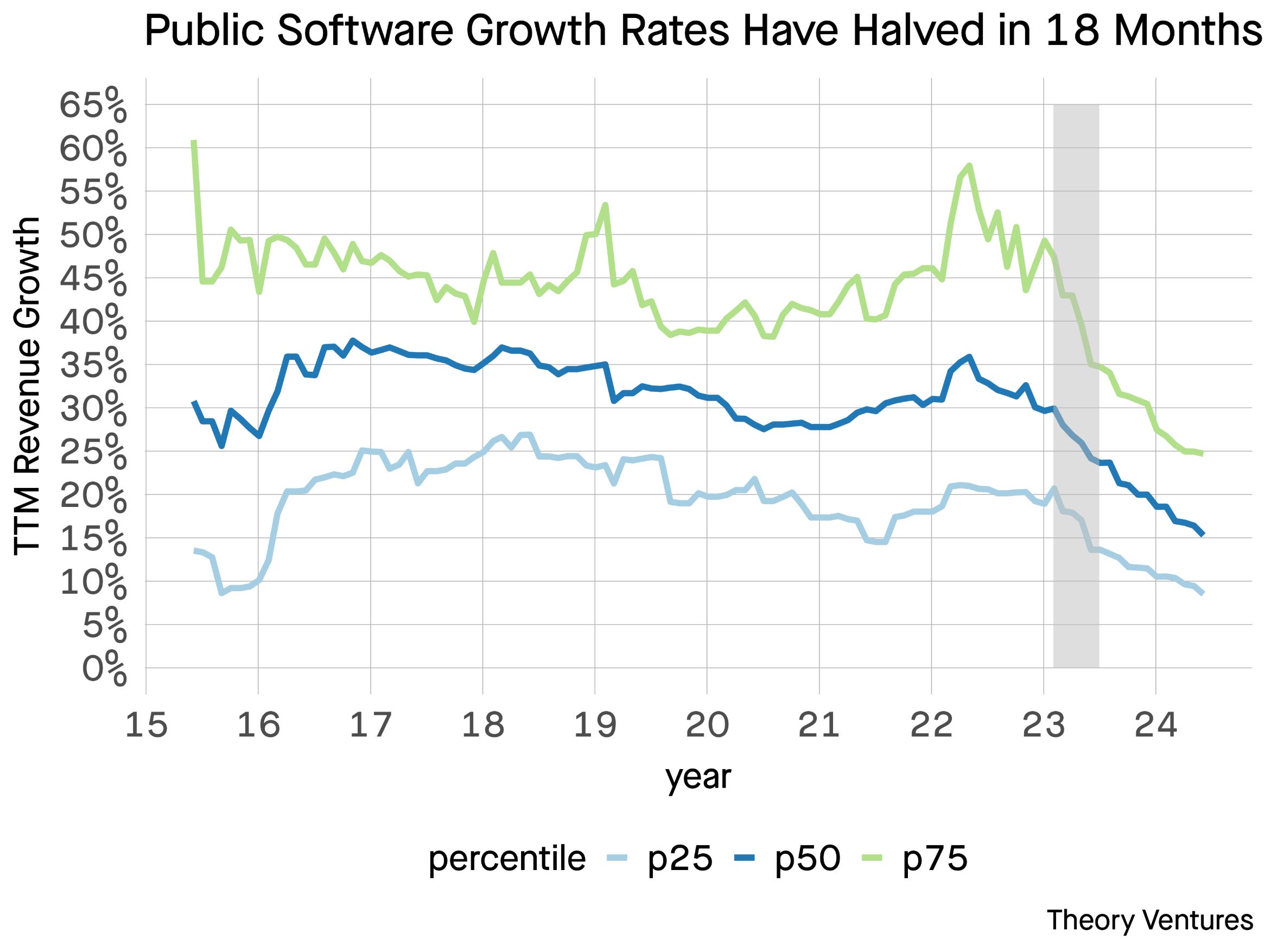
The AI revolution is shaking up the foundations and dynamics of every industry, and in this issue, I want to zoom in on one of the areas hit hardest by this wave: the software sector, particularly the SaaS and B2B ecosystems.
OpenAI and other AI-native startups are rolling out new models day by day, effectively killing off the products of many “legacy” entrepreneurs.
A slew of once-popular SaaS startup founders are now declaring bankruptcy, echoing the phrase “OpenAI is eating software”.
This transformation is insanely disruptive.
Subscription-based software (SaaS) and business-to-business (B2B) companies are watching as the business models they once saw as high-margin fortresses with sturdy walls are rapidly eroded by AI.
Advanced models developed by leading AI firms like OpenAI can either directly replicate many software functions and services that used to command premium prices or make them accessible at a fraction of the cost.
This is turning into nothing short of an existential crisis for software-based startups.
Who Are These Software-Based Startups?
Software-based startups and companies come in various flavors, depending on their business models, focus areas, and the solutions they offer.
Each startup has its own unique spin. Some blend multiple models (like SaaS and vertical together). The right model depends on the target audience, industry, and the startup’s vision.
SaaS (Software as a Service) Companies
They provide cloud-based software solutions accessible via subscription. Think Trello for project management or Paraşüt for accounting.
Features: Low upfront costs, access from anywhere, steady revenue stream.
Example areas: CRM, ERP, email marketing, workflow automation.
PaaS (Platform as a Service) Startups
They offer platforms for developers to build and deploy applications. Examples include Google Cloud or Heroku.
Features: Provides technical infrastructure, scalability, developer-focused.
Example uses: Web applications, data analytics platforms.
IaaS (Infrastructure as a Service) Companies
They deliver infrastructure services like servers, storage, and networking. Think Amazon AWS or Microsoft Azure.
Features: Eliminates hardware needs, highly scalable.
Examples: Big data processing, cloud hosting.
Mobile App Startups
They develop apps for smartphones and tablets, spanning games (Candy Crush) to social media (Instagram).
Features: User-centric, high growth potential, often driven by ads or in-app purchases.
Examples: Fitness apps, food delivery platforms.
Game Development Studios
They design and develop video games, ranging from indie studios to AAA giants.
Features: Creativity-driven, high risk-high reward, typically monetized through licenses or DLCs.
Examples: Mobile puzzle games, multiplayer battle royale games.
Fintech Software Startups
They provide software solutions for financial services, like payment systems, crypto exchanges, or budgeting tools.
Features: Security-focused, regulatory compliance, rapid growth potential.
Examples: Papara, BKM Express, robo-advisors.
AI and Data Analytics Companies
They work with machine learning, data processing, and predictive models, such as customer behavior analysis or fraud detection.
Features: High technical expertise, reliance on big data, often B2B-focused.
Examples: Chatbots, recommendation systems, image recognition.
Open-Source Software Startups
They develop free, community-supported software, often monetizing through consulting or premium features. Think Red Hat.
Features: Community-driven, low development costs, reliable.
Examples: WordPress, Linux-based solutions.
B2B Software Companies
They create solutions for other businesses, like route optimization for logistics firms or inventory management for retailers.
Features: Long-term contracts, high customization, stable revenue.
Examples: SAP, Salesforce.
B2C Software Startups
They target end consumers with apps for social media, entertainment, or personal productivity.
Features: Broad audience reach, viral growth potential, often freemium-based.
Examples: Notion, Spotify.
No-Code/Low-Code Platforms
They enable app development without coding, ideal for small businesses or those with limited technical skills.
Features: Rapid prototyping, low entry barriers, wide user base.
Examples: Bubble, Webflow.
Embedded Software Companies
They develop software integrated into hardware, like autonomous driving systems for cars or smart home devices.
Features: Hardware-software integration, high technical complexity.
Examples: Tesla’s driving software, Nest thermostats.
Edtech Software Startups
They provide education-focused solutions, such as online course platforms, language learning apps, or school management systems.
Features: User-centric, subscription or institutional sales models.
Examples: Duolingo, Udemy.
Vertical Software Startups
They focus on a single industry, addressing its specific needs, like patient tracking in healthcare or fleet management in logistics.
Features: Deep expertise, high customer loyalty, niche market dominance.
Example industries: Education, real estate, restaurant management, agriculture.
Compound Software Companies
They offer a suite of integrated products that lock customers into their ecosystem. Think Apple on a smaller scale: a CRM paired with invoicing and time tracking.
Features: Customer stickiness, low churn, cross-selling opportunities.
Example: HubSpot (marketing + sales + customer service).
The Major Threats AI Poses to the Software Industry
AI’s ability to “simplify” software and its growing capabilities are creating serious threats for industry players on multiple fronts:
Commoditization of Services and Software: AI can automate or significantly streamline core functions like text generation, code creation, data analysis, customer support, and visual design. Previously, specialized software or manual services handled these tasks, but now general-purpose AI models or AI-powered tools can offer them at a fraction of the cost—or even for free—causing their value to plummet. As AI incorporates the core offerings of SaaS companies into its skill set, these features become “table stakes,” putting intense pressure on pricing.
Intensified Competition and Lowered Barriers to Entry: As mentioned in the last issue, “vibe coding” and AI-enhanced no-code/low-code tools are enabling even non-technical individuals to quickly turn ideas into working prototypes or simple products. This lowers the barrier to market entry, flooding the space with new players and pushing competition to unprecedented levels. Standing out among thousands of rivals who can rapidly transform ideas into products is becoming a massive challenge.
Pressure on Profitability: Rising competition and commoditization directly hit profit margins. As customers find cheaper or alternative solutions through AI, software companies are forced to slash prices. High development costs paired with shrinking revenues threaten the sustainability of many firms.
Shifting Workforce and Skill Demands: AI has the potential to automate software development processes (coding, debugging), testing, and even tasks in product management and marketing. This could reduce or reshape demand for traditional software engineering roles. Companies will increasingly seek employees who can manage and integrate AI systems, while also bringing high-level problem-solving, strategic thinking, creativity, and human-centric skills that AI can’t replicate. Firms and workers unable to adapt to this skill shift will struggle.
Companies Turning to In-House Solutions: With AI tools, businesses are increasingly handling functions internally—using their own teams or AI-powered tools—instead of outsourcing or relying on third-party software. This trend particularly hurts B2B companies selling software for standardized or widely accepted processes. The question of “who’s selling what to whom?” is turning into a strategic puzzle.
Survival and Growth Strategies in a Chaotic Environment
Despite the crisis atmosphere in the market, some software companies continue to grow, offering a beacon of hope and guiding strategies.
The success of these firms typically hinges on two core strategies: Vertical Software and Compound Software.
These approaches counter AI’s generalizing power, enabling companies to carve out defensible niches and build ecosystems that boost customer loyalty.
1. Vertical Software: Diving Deep and Specializing in Niches
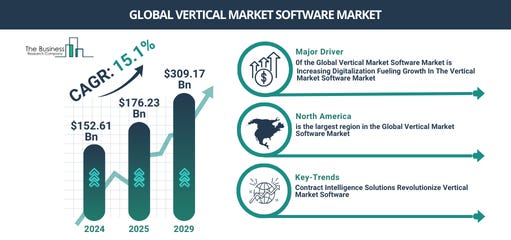
Vertical software focuses on a specific industry (e.g., healthcare, construction, e-commerce, legal, or restaurant management) and dedicates itself to solving that sector’s unique, deep-rooted problems, unlike generic, one-size-fits-all solutions.
Why It Works: While AI excels at general functions, it often falls short in areas requiring deep knowledge of a sector’s complex workflows, regulations, jargon, or unique customer relationships. Vertical software tackles these “last mile” challenges. Creating software that speaks the industry’s language and addresses its specific pain points is much harder for general-purpose AI or broad-based competitors to replicate.
Benefits:
Resilience: They’re more resistant to market turbulence because they provide indispensable, core solutions tailored to their customers.
Premium Valuation: Their revenue multiples far exceed the market average, signaling that investors place higher value on these niche, specialized models.
Loyal Customer Base: Industry professionals who find software perfectly suited to their needs rarely look for alternatives, boosting customer stickiness and lifetime value (CLTV).
2. Compound Software: Building Integrated Ecosystems
Compound software involves a suite of products or modules that seamlessly integrate, addressing a customer’s diverse needs within a single ecosystem. Think of Apple’s ecosystem of hardware, software, and services, or Adobe’s suite of design and marketing tools.
Why It Works: AI can automate individual tasks, but creating an integrated system that seamlessly connects the various steps of complex business processes is far tougher. Compound software eliminates the challenges of switching between tools or syncing data by providing a cohesive solution.
Benefits:
Low Churn: When customers use multiple integrated products, the cost of leaving the ecosystem rises. Being part of a suite rather than relying on a single product strengthens loyalty.
Pricing Power: Customers subscribe to the total value of an integrated ecosystem, not just a single benefit, reducing their tendency to haggle over price.
Seamless Experience: Delivering multiple functions through a unified platform with a consistent interface significantly enhances user experience (UX), making the software indispensable.
Focusing on "Last Mile" Solutions
The concept of “last mile” solutions, seen as a cornerstone of both strategies and a lifeline for software in the AI era, comes into play right here.
While general AI models can easily handle the initial or intermediate steps of a process, the “last mile” refers to the unique, nuanced, and often manual or expertise-driven final step specific to a customer, industry, or workflow.
Vertical software zeros in on an industry’s “last mile” problems, while compound software seamlessly connects the various “miles” of a business process, perfecting the journey to the “last mile”.
Success lies not in offering the general functions AI can already handle, but in solving the critical “last mile” details that AI can’t yet easily replicate or integrate.
In-House Solutions and the Future of Marketing
The trend of companies using AI to automate their internal processes poses a significant challenge for B2B software vendors. However, vertical and compound strategies offer a response to this hurdle.
A company’s internal team might use general-purpose AI tools to tackle basic tasks. But developing “last mile” solutions in-house—tailored to complex industry regulations, requiring deep integrations, or building a comprehensive ecosystem for multiple departments—is often costly, time-consuming, and beyond their existing expertise.
Software companies seem increasingly compelled to shift their value proposition from selling basic functions to delivering specialized, integrated solutions that optimize a customer’s business processes end-to-end.
Marketing and sales strategies must evolve in parallel. Instead of just saying, “Our software has X feature”, the pitch needs to become, “Here’s how our integrated solution set solves Z problem in Y industry with details AI can’t easily handle, transforming your workflow from top to bottom”.
Starting Point: Product and Customer
This transformation isn’t easy. It demands time, resources, and strategic restructuring. But in today’s market conditions, it’s essential for survival and growth.
As a starting point:
Audit Your Customer Base and Product Usage: Which industries show higher customer loyalty? Which features of your product create the most value in specific niches?
Identify Vertical Opportunities: Are there niches where your product naturally fits or could perfectly align with minor tweaks? (Think of a CRM adding class scheduling for fitness studios.)
Identify Compound Opportunities: What complementary functions do your customers use or need alongside your product? Can you integrate these into your ecosystem? (Like adding time tracking or invoicing to a project management tool.)
Start Small, Test: Instead of a massive overhaul, begin by developing a niche-specific feature or a new module that integrates with your existing product. Analyze the results.
Final Word
The commoditization and devaluation of software-based services is now as certain as our own names.
Rising competition, shrinking profitability, and shifting skill demands are the realities of this new era. But this chaos also holds immense opportunities for strategic, focused companies willing to break from tradition.
Against AI’s generalizing power, diving deep into niches, solving “last mile” problems at scale, and building integrated ecosystems can help software startups carve out defensible spaces and become indispensable to customers.
The software companies of the future are moving away from broad, do-it-all platforms toward vertical specialists that solve an industry’s end-to-end needs from A to Z or compound ecosystems that seamlessly meet multiple functional demands.
Those who recognize this shift early and align their strategies accordingly are poised to navigate the AI-devoured software landscape and emerge as leaders in this new era.