


🎙️ AUDIO DEEP DIVE OF THIS ISSUE:
Sammy & Mila offer in-depth analysis on each newsletter issue. Subscribe to their podcast.
📊 TRENDS, RESEARCH & REPORTS:
From Trust to Conversions: A Playbook for Micro-Influencers
In the constantly evolving world of digital marketing, few strategies have proven as impactful —or as elusive— as influencer marketing.
Many businesses are drawn to the reach of high-profile influencers, yet the real, uncharted territory lies in micro-influencers.
Think of these individuals as your brand’s best-kept secret: their smaller but deeply engaged audiences foster a level of trust and relatability that major influencers can’t always match.
Here’s a look at why micro-influencers are the future of digital marketing and how you can leverage their hidden potential for business growth.
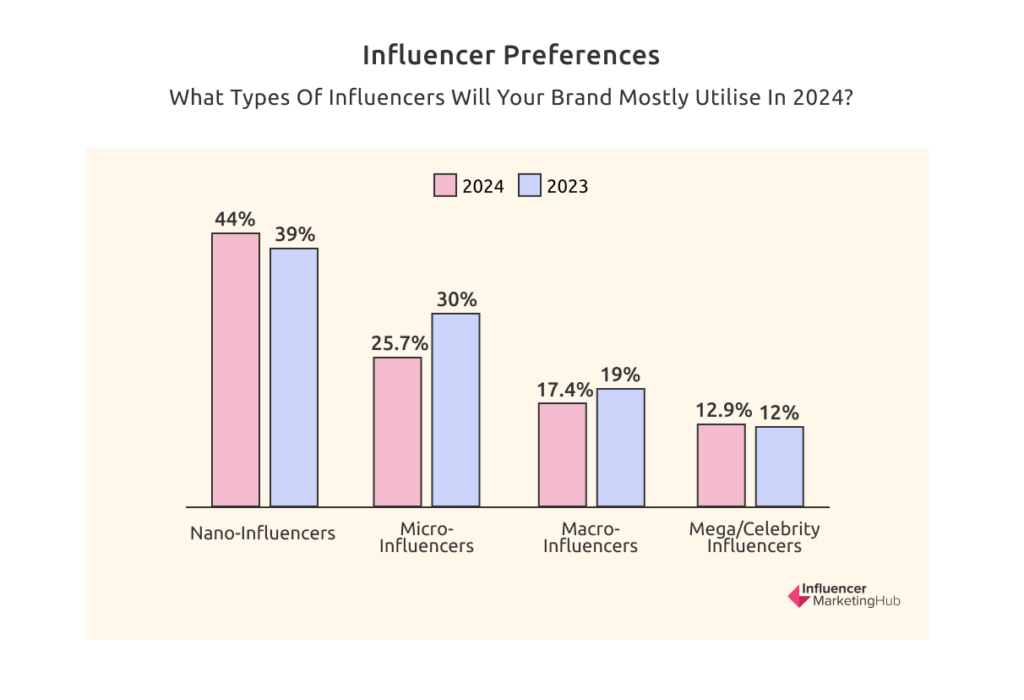
Micro-influencers are defined by their hyper-focused followings, often ranging from a few thousand to tens of thousands of followers.
Their communities are not vast but are highly engaged, making them fertile ground for authentic connections with brands.
Let’s look at why they’re gaining ground over their mega-influencer counterparts:
Authentic Engagement: Micro-influencers have something that macro-influencers struggle to maintain—authentic relationships with followers. This authenticity translates into genuine engagement, with their recommendations perceived as heartfelt endorsements. Higher engagement rates mean your brand is connecting on a personal level.
Cost-Effectiveness: Partnering with micro-influencers is easier on the budget than working with mega-influencers. This allows you to allocate resources across multiple influencers or campaigns, amplifying your brand’s reach without blowing your budget.
Niche Expertise: Micro-influencers often operate in niche markets. This targeted approach ensures your brand reaches the right people—those who already share values, interests, and needs that your products fulfill. It’s like speaking directly to your ideal customers.
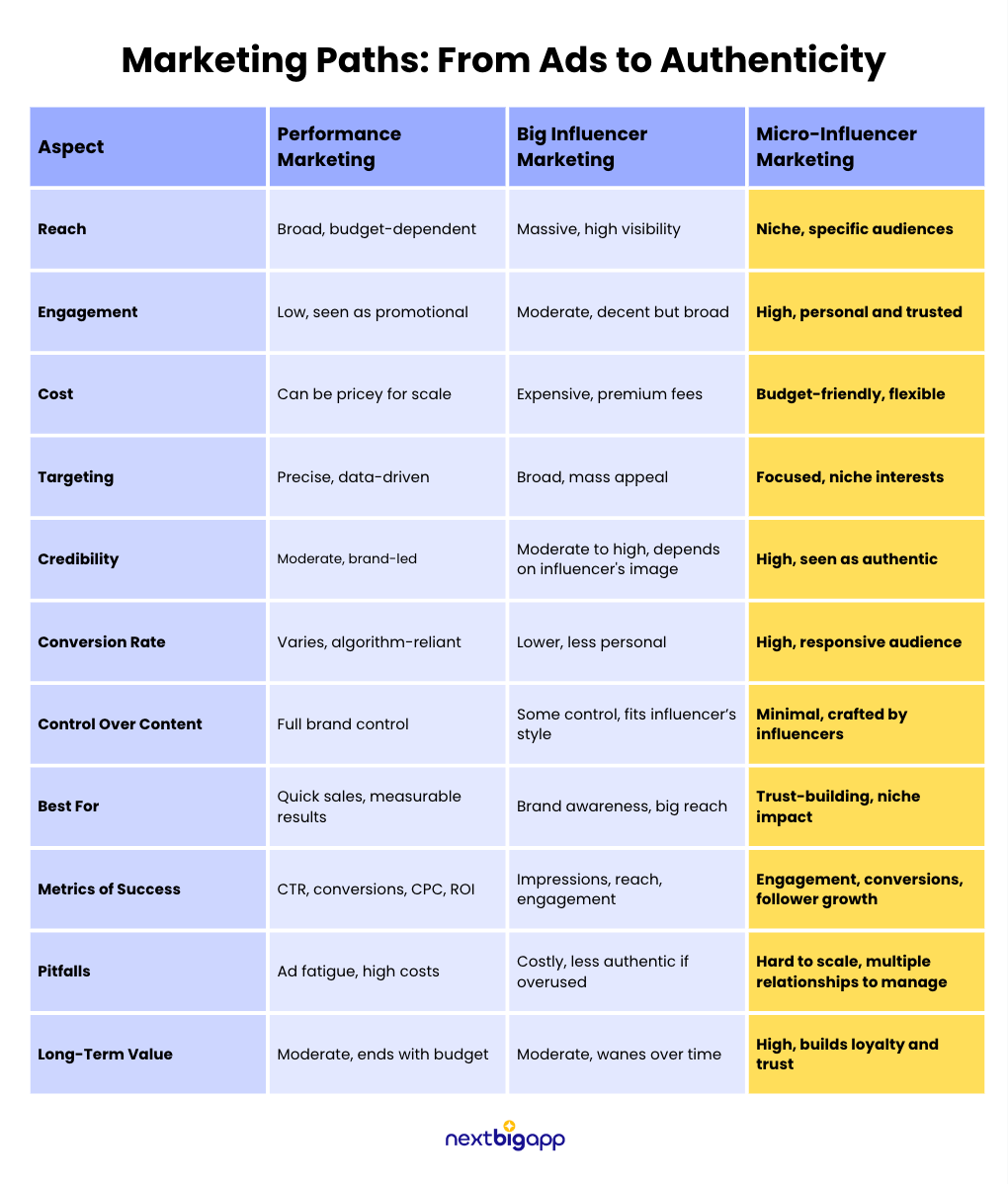
Select Your Optimal Marketing Path
In the ever-evolving landscape of digital marketing, understanding the best strategies to connect with audiences is crucial for business success.
While influencer marketing methods are recognized for their ability to build trust and drive sales, performance marketing stands out as one of the most efficient and rapid approaches available.
This comparison highlights the unique strengths of both performance marketing and influencer marketing—showcasing how they can complement each other in achieving optimal results.
Business leaders can better navigate their marketing strategies to maximize reach, engagement, and conversions by examining their key differences.
Here’s a closer look at how performance marketing stacks up against big and micro-influencer marketing.
One-Size-Fits-All
Influencer marketing is far from a one-size-fits-all approach. From the larger-than-life personalities with millions of followers to the niche experts who speak directly to specific communities, each type of influencer brings unique strengths to the table.
Understanding these primary types of influencer marketing can help you tap into the right voices to elevate your brand, connect authentically with audiences, and drive meaningful results.
Whether your goal is to go big or keep it personal, there's an influencer strategy perfectly suited to your business needs.
Let’s explore the main types and discover which one aligns best with your goals.
Sponsored Content: Brands pay influencers to create content that features their products or services, which can be shared on social media, blogs, or websites.
Product Reviews: Influencers receive products to try and share their honest opinions with their audience, helping to build credibility and trust.
Affiliate Marketing: Influencers promote products using unique affiliate links, earning a commission for each sale made through their referral.
Brand Ambassadors: Long-term partnerships where influencers represent a brand, consistently promoting their products and values over time.
Social Media Takeovers: Influencers temporarily take over a brand’s social media account, providing content from their unique perspective to engage the brand’s audience.
Influencer Events: Brands invite influencers to special events (like product launches or brand experiences) to generate buzz and coverage through their networks.
Collaborative Products: Influencers co-create products or collections with brands, leveraging their personal brand to attract their audience's interest.
Giveaways and Contests: Influencers host contests or giveaways on behalf of a brand, encouraging their followers to engage with the brand in exchange for a chance to win prizes.
Live Streaming and Webinars: Influencers host live events or educational sessions to engage with their audience in real-time, often featuring brand products or services.
Podcast Sponsorships: Brands sponsor podcast episodes where influencers discuss or promote their products, leveraging the podcast’s audience for increased reach.
These types of influencer marketing can be tailored to fit a brand’s specific goals, audience, and marketing strategies, maximizing the impact of influencer collaborations.
Proven Strategies for Micro-Influencer Success
Micro-influencer marketing offers unique advantages, and recent findings reveal some powerful strategies for businesses looking to leverage these connections. Here are some of the top insights:
Shift from Vanity Metrics: Numbers aren’t everything! Successful campaigns are shifting away from follower counts and focusing on real engagement. While big influencers like Barbara Costello (Brunch with Babs) have wide reach, micro- and nano-influencers often outperform in terms of engagement and trust with their niche audiences, making them surprisingly effective in driving action.
The Power of "Average" Performance: Instead of expecting peak engagement on every post, consider asking micro-influencers to match their 30-day engagement average as a baseline. This not only ensures a reasonable return on investment but also keeps expectations realistic, creating a balanced and productive collaboration.
The Value of Consistency: Long-term relationships trump one-off deals. Building consistent partnerships with high-performing micro-influencers fosters trust and leads to more authentic and creative campaigns—often yielding better results than one-time projects.
SEO Boosts, Indirectly: Forget shortcuts! While direct SEO boosts are unlikely, micro-influencers can drive site traffic and build brand authority. This added visibility and trust aligns with Google’s focus on expertise, experience, authority, and trust (EAT), making micro-influencer collaborations a solid strategy for long-term SEO growth.
The Potential Downside of Sales-Based Incentives: Linking influencer compensation solely to sales targets might backfire. Pushing influencers to "sell" can erode authenticity, potentially alienating their audiences. Consider performance-based incentives that encourage quality engagement without compromising genuine content.
Counteracting Influencer Fatigue: With audiences growing wary of big influencers, micro-influencers offer a refreshing alternative. Their niche expertise and down-to-earth approach connect more authentically with followers, countering the inauthentic feel of oversaturated influencer marketing.
In-House Teams as a Viable Alternative: For businesses wanting more control over their messaging, building an in-house content team—or collaborating with a brand spokesperson—can be a smart move. This approach keeps content authentic and directly aligned with brand goals.
Personality Matters: Professionalism is key. Gauge influencers’ communication style and responsiveness from the first conversation. Clear, professional interactions and shared values pave the way for a strong and sustainable partnership.
Each of these insights underscores the unique power of micro-influencer marketing to drive authentic engagement and results, emphasizing the thoughtful strategies needed to make these campaigns thrive.
Avoiding Common Mistakes in Micro-Influencer Campaigns
In the rush to engage micro-influencers, many brands overlook key pitfalls. To stay ahead, steer clear of these common mistakes:
Chasing Follower Counts: Prioritize engagement over follower size. A smaller, highly active audience will yield better results than a large, passive one.
Pushing Mismatched Products: Ensure your products fit the influencer’s niche. Forcing an ill-fitting promotion can harm both your brand and the influencer’s credibility.
Neglecting Clear Goals: Define clear objectives and metrics. Tracking KPIs lets you measure success and refine strategies for future campaigns.
Micromanaging Creativity: Micro-influencers excel when they can be authentic. Give them a framework, but avoid over-managing; otherwise, you risk losing the very authenticity that makes them effective.
Tools to Supercharge Your Micro-Influencer Strategy
To streamline your micro-influencer campaign, consider leveraging these tools:
Posted: Get viral content fast. Posted connects brands with creators through contests. Pay only for top-performing posts & scale winning content.
Transitional Hooks: Discover viral transitional hooks for social media videos, perfect for creating engaging intros that capture attention.
Trend.io: Submit a free brief and choose from our highly vetted network of thousands of creators interested in your products
Monroe: Get the perfect creators to your inbox, every week. Find influencers based on specific interests and niches.
ttagz: Encourages your fan base to share their product experiences in exchange for a reward. You’ll get more UGC content.
Influencity: AI-powered influencer search and analysis; provides insights on audience demographics, engagement, and campaign performance.
Upfluence: Ideal for discovering influencers based on detailed audience insights, Upfluence helps match your brand with influencers that align with your target demographics.
Heepsy: Database of 11M+ influencers; advanced filtering and search tools help small businesses find niche and location-specific influencers.
NinjaOutreach: Comprehensive tool for influencer outreach and lead generation; ideal for discovering micro and nano influencers across niches.
Micro-influencers offer a remarkable opportunity for brands to forge meaningful, cost-effective connections with their target audience.
This approach and steering clear of common mistakes, you’re setting up your brand to maximize reach, engagement, and conversions—unlocking the secrets to a truly impactful digital presence.

🧙♂️ TIPS & TRICKS:
From Technician to Visionary: Growing a Business That Runs Without You
The dream of starting a business and becoming your own boss is one many share. But reality often has a sobering way of interrupting, with nearly half of new businesses struggling to survive past the first few years.
As I’ve learned over the years, and as Michael E. Gerber explains in The E-Myth Revisited, much of this difficulty stems from what he calls the “Entrepreneurial Myth”.
It’s the mistaken belief that being good at a technical skill is enough to build a successful business.
This myth, however, often traps founders in endless tasks, much like the baker Sarah in Gerber’s story, who started a bakery only to realize she was buried under tasks far beyond baking.
The Multi-Faceted Role of a Founder
Seeing countless entrepreneurs struggle with this challenge inspired my own journey.
Like so many, I started out as a Technician, deeply involved in the technical aspects of my work. But to truly grow a business, I realized founders must embrace two other key roles: the Entrepreneur and the Manager.
The Technician: This is often the comfort zone – the hands-on work you’re passionate about. For me, it was developing AI-driven solutions that actually work for small businesses. But passion alone doesn’t grow a company.
The Entrepreneur: This role requires vision – imagining the company’s future, spotting opportunities, and innovating ways to scale. It’s what led me to create Next Big App, a platform that helps founders automate and maximize their potential with AI. I realized that, like Sarah, many founders needed to step back from daily tasks and build systems that allow them to focus on growth.
The Manager: The last, and often most challenging role, is that of a manager. It’s about setting up processes, organizing teams, and building the scaffolding for a business that can thrive independently. This shift from owner-operated to system-operated was pivotal in my journey.
Building a Business that Runs Without You: The Turn-Key Model
One of the key lessons in The E-Myth is the idea of the “Turn-Key Revolution.” Imagine McDonald’s – wherever you go, you get a consistent experience, regardless of who is working that day.
This is possible only because they’ve mastered standardization.
Many businesses could thrive with this mindset, but it’s not just about systems for systems’ sake; it’s about the freedom and scalability these systems provide.
I explored this principle deeply in my book series, The AI Entrepreneur's Handbook.
Seeing the potential for founders to leverage AI within their business systems inspired me to develop these books as practical guides, aiming to show that automation is not just for giants with massive tech budgets.
It’s a way to make sure your business isn’t reliant on you for every decision and task – allowing you to actually grow.
The AI Advantage: Bringing Cutting-Edge Tools to Small Businesses
In recent years, the democratization of AI has opened doors previously reserved for big tech companies.
Andrew Ng’s TED Talk, How AI Could Empower Any Business, captures the excitement of this shift, particularly for small businesses that, until now, have lacked the resources to fully utilize AI.
He argues that with accessible AI platforms, businesses no longer need specialized coding skills to leverage this technology.
For example, smaller retailers can use AI for demand forecasting and personalized marketing, improving both their operations and customer experiences.
The creation of Next Big App was my way of bringing this AI power directly to the small business owners who need it most.
Imagine if entrepreneurs had a tool that helped them set up automated systems with as much ease as they set up their email accounts.
From sales and customer follow-ups to trend forecasting and market insights, AI can free founders from the daily grind, giving them space to work on their business rather than in it.
A Future-Proof Business: Practical Tips for Founders
If there’s one thing I’ve learned, it’s that resilience in business isn’t just about having the right tools or skills; it’s about being open to evolution. Here’s how to make your business future-proof:
Be Ready for the Roles of Entrepreneurship: Recognize that building a successful business goes beyond technical skill. Invest in cultivating an entrepreneurial mindset and managerial skills.
Systematize Your Business: Build a turn-key operation by creating, documenting, and standardizing processes.
Leverage AI for Efficiency: The tools available today make it easier than ever for founders, even those without technical backgrounds, to develop AI-powered solutions for their specific needs.
The future belongs to business leaders who leverage technology and AI to build scalable systems. The E-Myth principles, combined with AI, can unlock the full potential of AI to create resilient, innovative businesses.
💡 INSPIRING IDEAS:
“Most of the tools from medieval times were extensions of the physical self. Tools are now extensions of the mental self.”
— Lotoya Peterson